


Shiei Riding a Carp by Yoshitoshi - Wooden Jigsaw Puzzle
Shiei Riding a Carp by Yoshitoshi - Wooden Jigsaw Puzzle
- Regular price
- Price: $115.00
- Regular price
- List Price: $0.00
- Sale price
- Price: $115.00
- Unit price
- per
Key Features:
Key Features:
- Premium Quality: Crafted from durable 3mm (.14in) composite wood board for lasting enjoyment.
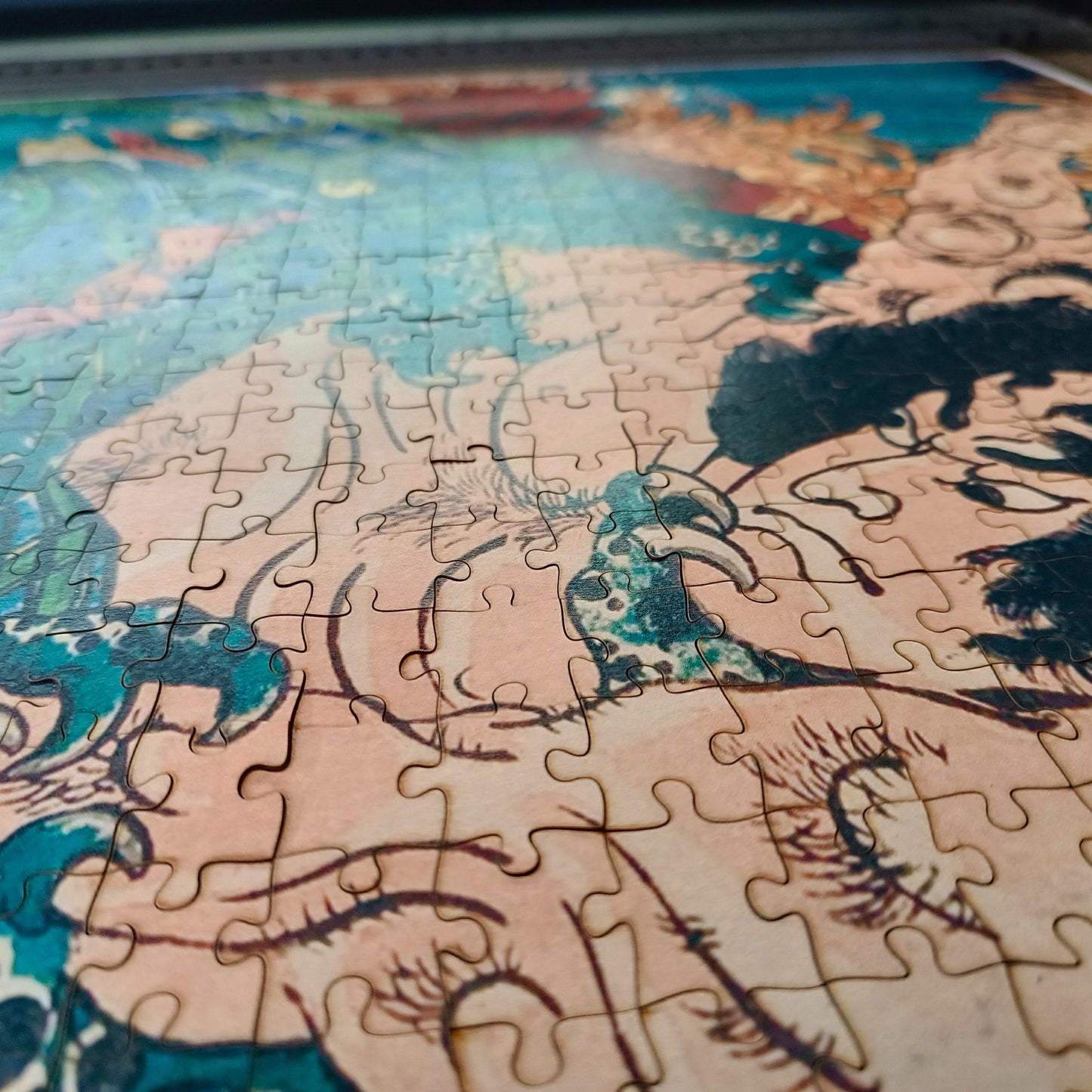
- Vibrant Imagery: High-resolution UV printing directly on the wood—no paper laminate—for stunning detail and vibrant colors.
- Eco-Conscious: Made with environmentally friendly materials.
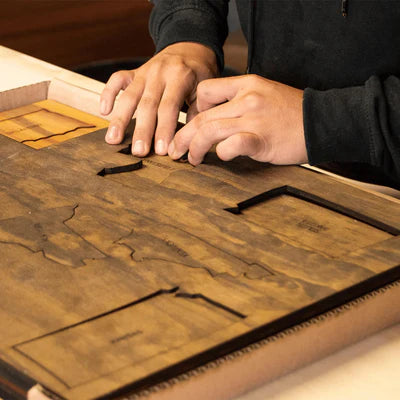
- Heirloom Keepsake: Your puzzle arrives beautifully packaged in a handcrafted wooden box, perfect for gifting or storing your masterpiece.
Craftsmanship and Care:
Craftsmanship and Care:
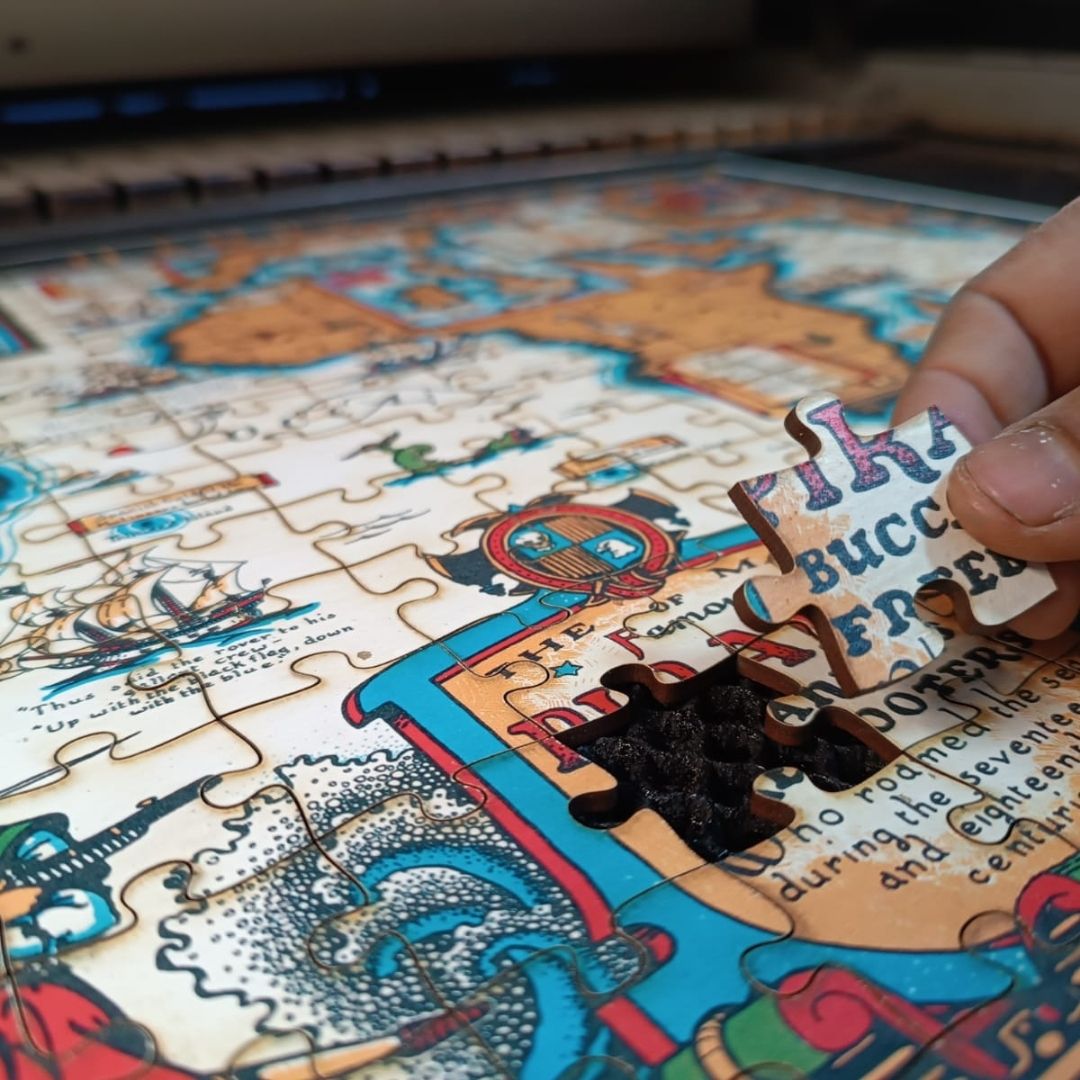
Experience the satisfying click of perfectly interlocking pieces. Our state-of-the-art laser cutting ensures precise fit and a smooth, seamless puzzle-solving experience. The perfect upgrade from cardboard without breaking the bank.
- Natural Laser Residue: A small amount of harmless black residue from the laser cutting process may be present. Simply wipe it away with a damp cloth.
- Hand-Finished Details: Each puzzle board, each wooden box are all carefully hand-stained, painted, and glued.
Satisfaction Guaranteed:
Satisfaction Guaranteed:
We are confident in the quality of our puzzles. If you are not completely satisfied, we offer a full refund or exchange.
PLEASE NOTE:
Each puzzle is crafted to make the most of your chosen size. Artwork may be subtly adjusted to meet our material and production standards while honoring the original work. Planning to frame yours? Email info@whatawoodwork.com for final measurements.
Couldn't load pickup availability
In stock
 PRODUCT DESCRIPTION
Shiei Riding a Carp over the Sea — Wooden Jigsaw Puzzle
According to Taoist legend, Shiei caught a red carp, fed it until it grew large enough to carry him, and rode it straight to heaven. Yoshitoshi painted this in 1882 as part of a series of forty folklore subjects — humorous, irreverent, and technically precise all at once. Copies sit in the permanent collections of LACMA and the Harn Museum of Art.
📖 The Story Behind This Piece
Around 1882, Yoshitoshi made this print for his series Yoshitoshi Ryakuga — "Sketches by Yoshitoshi" — forty subjects drawn from folklore and legend, often printed in pairs on a single ōban sheet. The series has a deliberately loose, almost improvisational quality. Shiei stands upright on an enormous red carp, the waves churning beneath them in thick, kinetic lines. The composition moves fast. The carp's scales catch the eye before anything else, then the waves, then the figure — and then you notice the expression on Shiei's face, which is not triumphant so much as completely untroubled.
Yoshitoshi is usually called the last great master of ukiyo-e, but that framing undersells what he was actually doing. By 1882, woodblock printing was losing ground to Western photography and lithography. Most artists moved on. Yoshitoshi stayed, and pushed harder — using the old technique to get at something rawer and stranger than his predecessors had tried for. The "Sketches" series was part of that: folklore subjects handled with a speed and expressiveness that reads less like tradition and more like a decision.
During assembly, the waves are where the work gets interesting. Yoshitoshi's water is built from overlapping curved lines rather than gradients, so you're sorting pieces by rhythm as much as by color. A run of nearly identical blue-grey pieces will look interchangeable on the table. On the assembled puzzle, the UV-printed wood gives each line a slight physical relief that a screen flattens out entirely — the difference between reading about brushwork and actually seeing where one stroke ends and another begins.
🎁 Who Gets One of These
A few specific kinds of people tend to reach for this one.
✔️ The collector who owns ukiyo-e prints but has never handled one as a puzzle — You know Yoshitoshi's mature work. Reassembling his wave technique piece by piece is a different way of spending time with it.
✔️ The museum member who caught the MFA's Japanese woodblock survey — You left wanting more context on the late Meiji masters. LACMA holds a copy of this exact print. Now you can own a version that lives on your wall.
✔️ The mythology reader who's gone deep on Taoist folk tradition — Shiei's carp story is well-documented in classical texts. Seeing Yoshitoshi's interpretation of it is its own small argument about how folklore gets transmitted.
✔️ The puzzler who's finished the cardboard options and wants something worth keeping — The wooden box stays after the puzzle is framed. It doesn't go in the recycling.
✔️ The gift-giver shopping for someone with a Japan trip already booked or recently returned — Specific cultural context, a real artist, a real story. Not a generic souvenir.
Strong gift occasions: birthdays for anyone with a serious interest in Japanese art or mythology; cultural anniversaries; thank-you gifts after a hosted stay. The combination of a named artist and a documented legend gives the gift something to say for itself.
🧩 Puzzle Specifications
✔️ Precision laser-cut wooden pieces
✔️ 3mm MDF core — rigid, warp-resistant, built to last
✔️ UV printing directly on wood — no paper laminate, no peeling
✔️ Traditional grid-cut design
✔️ Handcrafted wooden keepsake box included
✔️ Made to order — ships in 3–4 weeks
💎 Why This Puzzle Lasts
Most wooden puzzle makers charge $300 to $500. The craft justifies it. WAWW gets to the same place differently: direct manufacturing, no wholesale chain, made to order with no warehouse inventory carrying costs. The result is the same quality at $115 to $170. That's not a discount. It's just the honest price.
The 3mm MDF core is what separates a puzzle worth keeping from one that warps after two humid summers. Pick up a finished piece and it holds its shape cleanly — no flex, no soft edges. Cardboard absorbs moisture; MDF doesn't. A puzzle built on this core fits together the same way on year one as on year twenty. The UV printing goes directly onto the wood surface rather than onto a paper layer bonded over it. No laminate means no peeling at the corners, no color shift as the adhesive ages. The print you see now is the print you'll see in a decade.
The traditional grid cut means every piece has a clear function: find the edge, build the border, work inward. No novelty shapes competing with the image for attention. The pieces click with enough resistance that sections hold together when you move them. The handcrafted wooden box is sized for the assembled puzzle, not for shipping convenience — most people end up using it for storage long after the puzzle is framed, or keeping it on a shelf as its own object. Production is made to order, which means your puzzle doesn't exist until you buy it. The wait is three to four weeks. What arrives hasn't been sitting in a warehouse.