


Soap Bubbles by Chardin - Wooden Jigsaw Puzzle
Soap Bubbles by Chardin - Wooden Jigsaw Puzzle
- Regular price
- Price: $115.00
- Regular price
- List Price: $0.00
- Sale price
- Price: $115.00
- Unit price
- per
Key Features:
Key Features:
- Premium Quality: Crafted from durable 3mm (.14in) composite wood board for lasting enjoyment.
- Vibrant Imagery: High-resolution UV printing directly on the wood—no paper laminate—for stunning detail and vibrant colors.
- Eco-Conscious: Made with environmentally friendly materials.
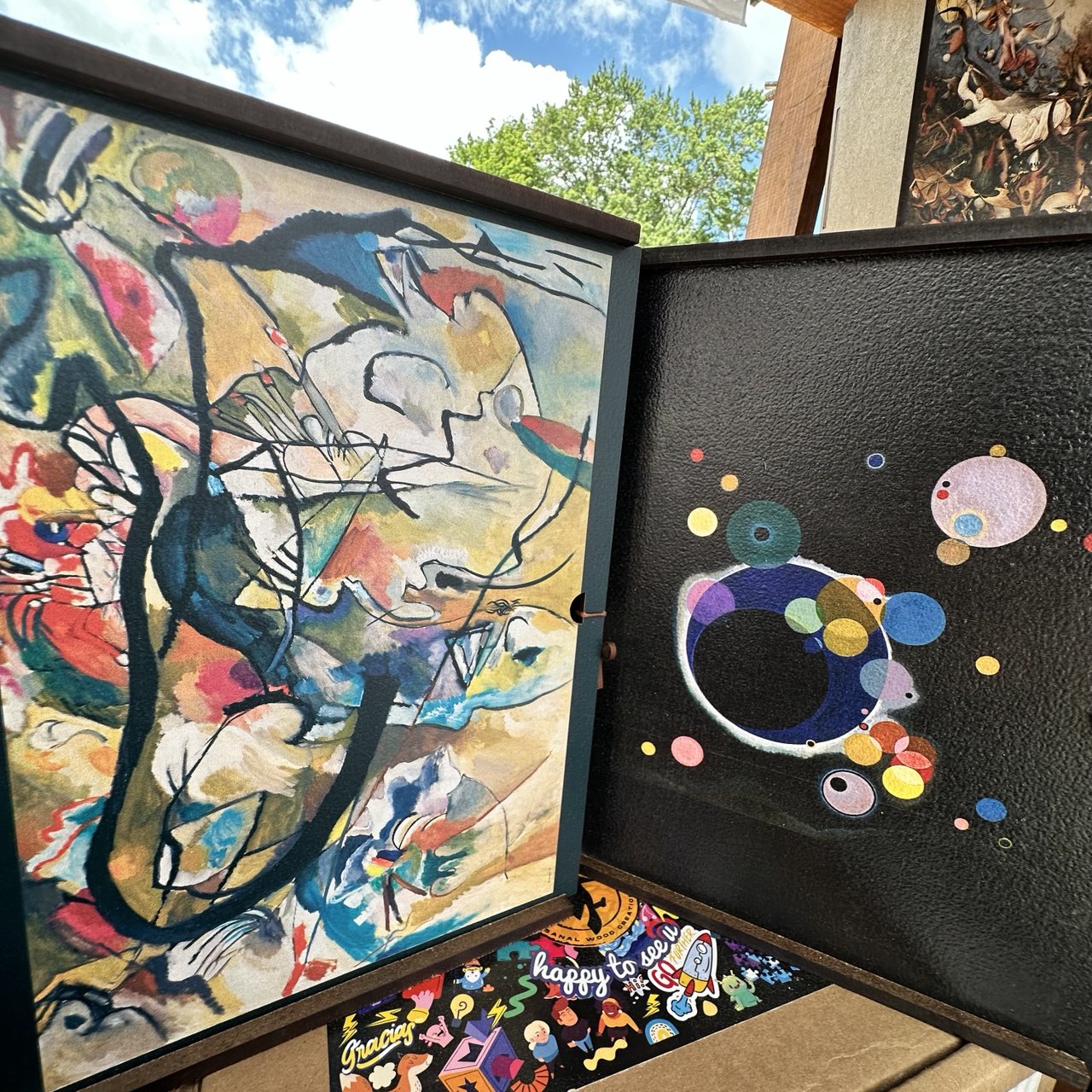
- Heirloom Keepsake: Your puzzle arrives beautifully packaged in a handcrafted wooden box, perfect for gifting or storing your masterpiece.
Craftsmanship and Care:
Craftsmanship and Care:
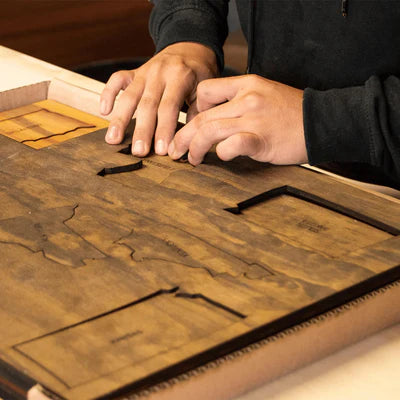
Experience the satisfying click of perfectly interlocking pieces. Our state-of-the-art laser cutting ensures precise fit and a smooth, seamless puzzle-solving experience. The perfect upgrade from cardboard without breaking the bank.
- Natural Laser Residue: A small amount of harmless black residue from the laser cutting process may be present. Simply wipe it away with a damp cloth.
- Hand-Finished Details: Each puzzle board, each wooden box are all carefully hand-stained, painted, and glued.
Satisfaction Guaranteed:
Satisfaction Guaranteed:
We are confident in the quality of our puzzles. If you are not completely satisfied, we offer a full refund or exchange.
PLEASE NOTE:
Each puzzle is crafted to make the most of your chosen size. Artwork may be subtly adjusted to meet our material and production standards while honoring the original work. Planning to frame yours? Email info@whatawoodwork.com for final measurements.
Couldn't load pickup availability
In stock
 PRODUCT DESCRIPTION
Soap Bubbles — Wooden Jigsaw Puzzle
Chardin painted this around 1733, and it was one of his first attempts at painting people. He'd spent years on still lifes — dead hares, copper pots, a glass of water. Then he turned to a young man blowing a soap bubble while a small child watches from below the ledge. Three versions exist, held at the National Gallery of Art, the Met, and LACMA. Nobody knows exactly why he painted it three times.
📖 The Story Behind This Piece
Chardin made Soap Bubbles around 1733 to 1734, at the moment he was shifting from objects to people. The composition is spare: a young man leans over a stone ledge, straw to his lips, a bubble forming at the end of it. A child peers up from below the ledge line, barely visible. In 17th-century Dutch painting, a soap bubble was a straightforward vanitas symbol — life is short, pleasure is fleeting. Chardin knew that tradition. He chose not to underline it. The figures are absorbed in what they're doing. The moralizing is absent.
By the early 1730s, Chardin had built his reputation on inanimate objects. He was unusually good at making a ceramic jar or a side of salmon feel present, almost weighted. When he moved into figure painting, he carried that same attention with him. He wasn't interested in narrative or drama. He painted people the way he painted things: with complete concentration on what was actually there, not what the subject was supposed to mean.
Chardin's palette runs dark and close-valued — warm browns, muted ochres, deep shadow behind the figures. UV printing onto MDF wood rather than paper laminate pulls those shadow gradations out without the slightly plastic sheen that photo-paper puzzles produce. The hardest section to solve is the stone ledge itself, which looks uniform in a thumbnail but opens up, piece by piece, into a dozen distinct tonal variations. You'll find yourself sorting pieces you thought were identical and discovering they aren't.
🎁 Who Gets One of These
A few specific types of people tend to end up with this one.
✔️ The collector who owns 18th-century European prints — You already know Chardin's name. Having one of the three known versions of this painting reconstructed at 1000 pieces is a different relationship with the work than a framed reproduction.
✔️ The art history professor or serious student — Chardin's shift from still life to genre painting is a standard lecture topic. Working through the actual composition, section by section, is not the same as seeing a slide of it.
✔️ The museum member who visits the National Gallery of Art regularly — The Washington version hangs there. Assembling this puzzle at home is a chance to spend real time with an image you've walked past more than once.
✔️ The parent or grandparent who wants a gift with staying power — The wooden box alone signals this wasn't grabbed off a shelf. The subject — a young man, a watching child, a moment of quiet attention — lands differently for people who are thinking about those relationships.
✔️ The puzzler who has finished the cardboard phase — You know what a good cut feels like and you know what a bad laminate looks like after six months. Wooden pieces with a UV-printed surface are a different category of object.
🧩 Puzzle Specifications
✔️ Precision laser-cut wooden pieces
✔️ 3mm MDF core — rigid, warp-resistant, built to last
✔️ UV printing directly on wood — no paper laminate, no peeling
✔️ Traditional grid-cut design
✔️ Sizes: 15"x23", 18"x24", 23"x31"
✔️ Piece counts: 300–1000
✔️ Handcrafted wooden keepsake box included
✔️ Made to order — ships in 3–4 weeks
💎 Why This Puzzle Lasts
Wooden jigsaw puzzles from most specialty makers run $300 to $500. The craft is real and the price reflects it. WAWW gets to the same place through direct manufacturing and no wholesale chain between the workshop and your door. Made to order, not sitting in a warehouse. Same materials. No markup layered on top.
The 3mm MDF core is what separates wooden puzzles from cardboard ones in practical terms. Cardboard compresses and warps; MDF stays flat and rigid. Pieces cut from it click together with a satisfying snap and keep clicking that way years from now, not just the first time through. UV printing bonds the image directly to the wood surface rather than laminating paper on top. No peeling at the corners after a few reassemblies. No fading on a shelf in a room with afternoon light.
The laser-cut traditional grid means pieces interlock cleanly and fit exactly one way. No ambiguity, no forcing. When the puzzle is finished, it goes back into the wooden keepsake box — a real box, jointed and finished, not a sleeve or a bag. Most people find uses for the box after the puzzle moves to a frame. The made-to-order process means your puzzle is cut after you place the order, not pulled from stock. The 3 to 4 week lead time is the direct result of not manufacturing speculatively.