
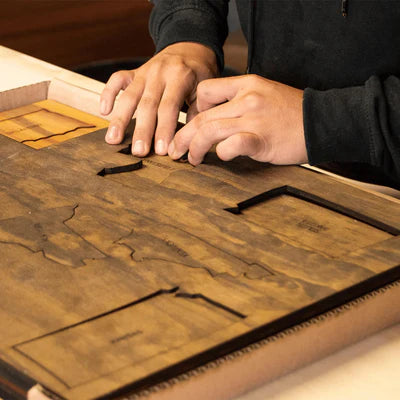


Great Barrier Reef Echinoderms Jigsaw | Saville-Kent 1893 Wooden Puzzle
Great Barrier Reef Echinoderms Jigsaw | Saville-Kent 1893 Wooden Puzzle
- Regular price
- Price: $115.00
- Regular price
- List Price: $0.00
- Sale price
- Price: $115.00
- Unit price
- per
Key Features:
Key Features:
- Premium Quality: Crafted from durable 3mm (.14in) composite wood board for lasting enjoyment.
- Vibrant Imagery: High-resolution UV printing directly on the wood—no paper laminate—for stunning detail and vibrant colors.
- Eco-Conscious: Made with environmentally friendly materials.
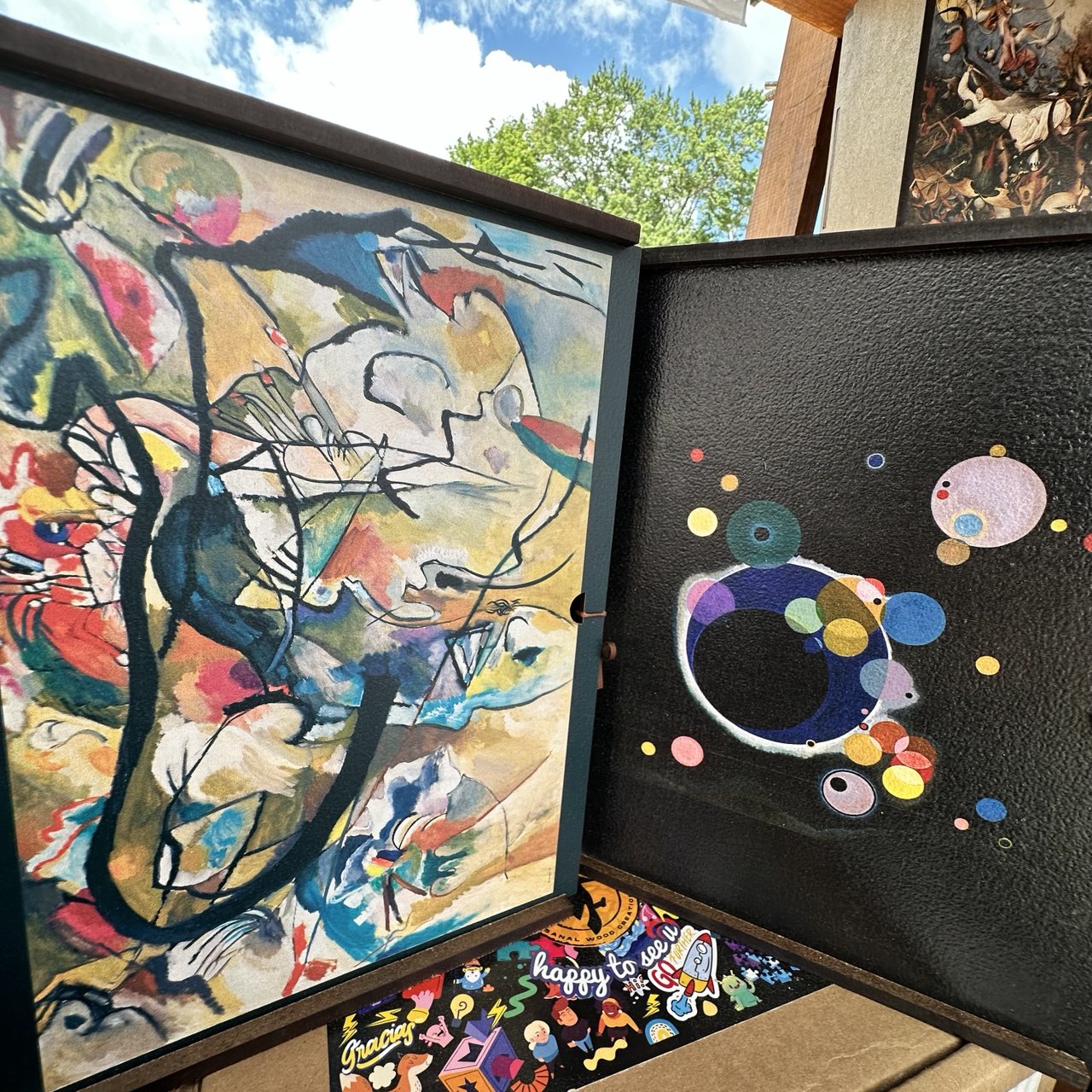
- Heirloom Keepsake: Your puzzle arrives beautifully packaged in a handcrafted wooden box, perfect for gifting or storing your masterpiece.
Craftsmanship and Care:
Craftsmanship and Care:
Experience the satisfying click of perfectly interlocking pieces. Our state-of-the-art laser cutting ensures precise fit and a smooth, seamless puzzle-solving experience. The perfect upgrade from cardboard without breaking the bank.
- Natural Laser Residue: A small amount of harmless black residue from the laser cutting process may be present. Simply wipe it away with a damp cloth.
- Hand-Finished Details: Each puzzle board, each wooden box are all carefully hand-stained, painted, and glued.
Satisfaction Guaranteed:
Satisfaction Guaranteed:
We are confident in the quality of our puzzles. If you are not completely satisfied, we offer a full refund or exchange.
PLEASE NOTE:
Each puzzle is crafted to make the most of your chosen size. Artwork may be subtly adjusted to meet our material and production standards while honoring the original work. Planning to frame yours? Email info@whatawoodwork.com for final measurements.
Couldn't load pickup availability
In stock
 PRODUCT DESCRIPTION
The reef looked like this once. Saville-Kent was there to document it, and we've made it a wooden Jigsaw Puzzle.
In 1893, English marine biologist William Saville-Kent published The Great Barrier Reef of Australia, accompanied by full-color illustrations drawn from his on-location watercolors. It was the first popular science book ever written about the reef.
📖 The Story Behind This Piece
Chromo XI is one of those plates. It shows echinoderms — the phylum that includes starfish, sea urchins, and crinoids — rendered at a scale and richness that had never been attempted before. The dominant starfish in terracotta and rust, its arms studded with dark tube feet. The teal sea urchin radiating spine-lines like a compass. The feathery crimson crinoid fanning into the upper right corner like something between a plant and a firework. Each specimen numbered and labeled with the precision of a field report.
What made Saville-Kent's work historically extraordinary was that he observed these marine organisms and drew them in their natural habitat — not transplanted to aquariums — and brought photography to bear on marine biology for the first time. The chromolithographs were executed by London-based printers Riddle and Couchman, who translated Saville-Kent's watercolors into color with a vividness that, Saville-Kent's carefully captured specimens literally pale in comparison to — the lithographers brought them to such vibrant life.
There is an uncomfortable truth built into owning this print. Today the Great Barrier Reef resembles Saville-Kent's black-and-white photographs more closely than these gorgeous lithographs — the victim of back-to-back bleaching events brought on by pollution-related climate change. This plate is therefore two things simultaneously: a document of scientific wonder and an archive of color that may no longer exist at reef scale. The echinoderms in Chromo XI are still there. Whether they look like this is another question.
🎁 Who Gets One of These
✔️ The marine biologist or ocean conservationist who keeps art on the office wall — Saville-Kent got the anatomy right, and someone in your field will know it.
✔️ The natural history collector who already owns Haeckel prints — this is the Pacific counterpart, painted on location the same decade, by the scientist who was actually there.
✔️ The person who cares about the reef — this plate documents what it looked like before bleaching became a recurring headline. That context doesn't leave you.
✔️ The gift buyer looking for something with real historical weight — an 1893 chromolithograph of Great Barrier Reef echinoderms, laser-cut in wood, is not something they have.
✔️ The botanical and natural history art collector — Saville-Kent's plates sit comfortably alongside Haeckel, Audubon, and Gould. This is that tier of scientific illustration.
Strong for birthdays, World Oceans Day (June 8), and winter holidays. A genuine option for marine science graduation gifts, conservation-focused retirements, or anyone who has ever dived the reef and wants to remember what it looked like at its most alive.
🧩 Why This Works as a Puzzle
This plate was designed to be studied. Thirteen numbered specimens, each with distinct color, texture, and form — the spiny geometry of the sea urchin at bottom center, the leathery mottled surface of the holothurian at right, the branching coral fragments catalogued in the upper register. Assembly happens at that same scale of attention. You sort by the warm terracotta of the starfish arms, then by the cooler teal of the urchin spines, then by the almost-identical pinks of the crinoid fronds and the coral branches that photograph as the same hue but read differently in hand.
UV printing bonds pigment directly into the wood grain. The aged cream of the original lithograph paper, the subtle tonal shifts in the background, the fine ruled lines of the specimen labels — all of it stays sharp across repeated assembly. No paper laminate to dull the detail. No peeling at the edges after years of handling.
💎 Why This Puzzle Lasts
Wooden puzzles from most makers run $300 to $500. The craft justifies that range. WAWW gets to $115–$170 through direct manufacturing and no wholesale chain in between. Same 3mm MDF core, same UV printing on wood, same laser cutting. No warehouse sitting on inventory, no retailer marking it up twice.
The 3mm MDF core is why a piece you set down in year one still clicks cleanly in year fifteen. Cardboard compresses. The edges soften and the fit loosens. MDF doesn't do that. Each piece holds its shape, which means the tactile feedback you get on a correct connection stays consistent across the whole build.
UV printing goes directly into the wood surface, so there's no paper layer waiting to delaminate at the edges. The colors in Saville-Kent's chromolithographs, particularly the warm coral pinks and deep sea blues, stay exactly as printed. Traditional grid cutting gives every piece a clear orientation, which matters with an image this dense in organic texture. The handcrafted wooden storage box is the object that stays on the shelf after the puzzle is framed or stored. And because every puzzle is made to order, nothing sits in a warehouse. Your order goes into production when you place it.
🖼️ After You Finish It
Most people frame it. The wooden keepsake box ends up nearby, on a shelf or a side table, and it draws its own questions before anyone even gets to the image. Saville-Kent's reef illustrations have been reproduced in natural history collections and museum archives for 130 years. Rebuilding one by hand, section by section, starting from the coral branches and working outward, is a different relationship with the same image.