
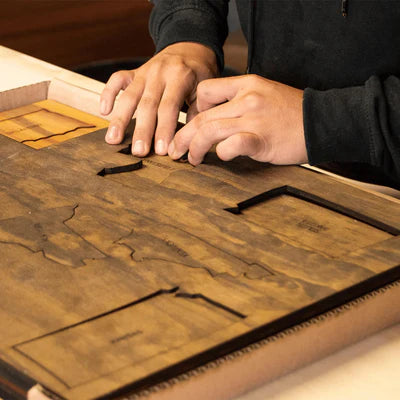


The Intruder by Fitzgerald - Premium Wooden Jigsaw Puzzle
The Intruder by Fitzgerald - Premium Wooden Jigsaw Puzzle
- Regular price
- Price: $145.00
- Regular price
- List Price: $0.00
- Sale price
- Price: $145.00
- Unit price
- per
Key Features:
Key Features:
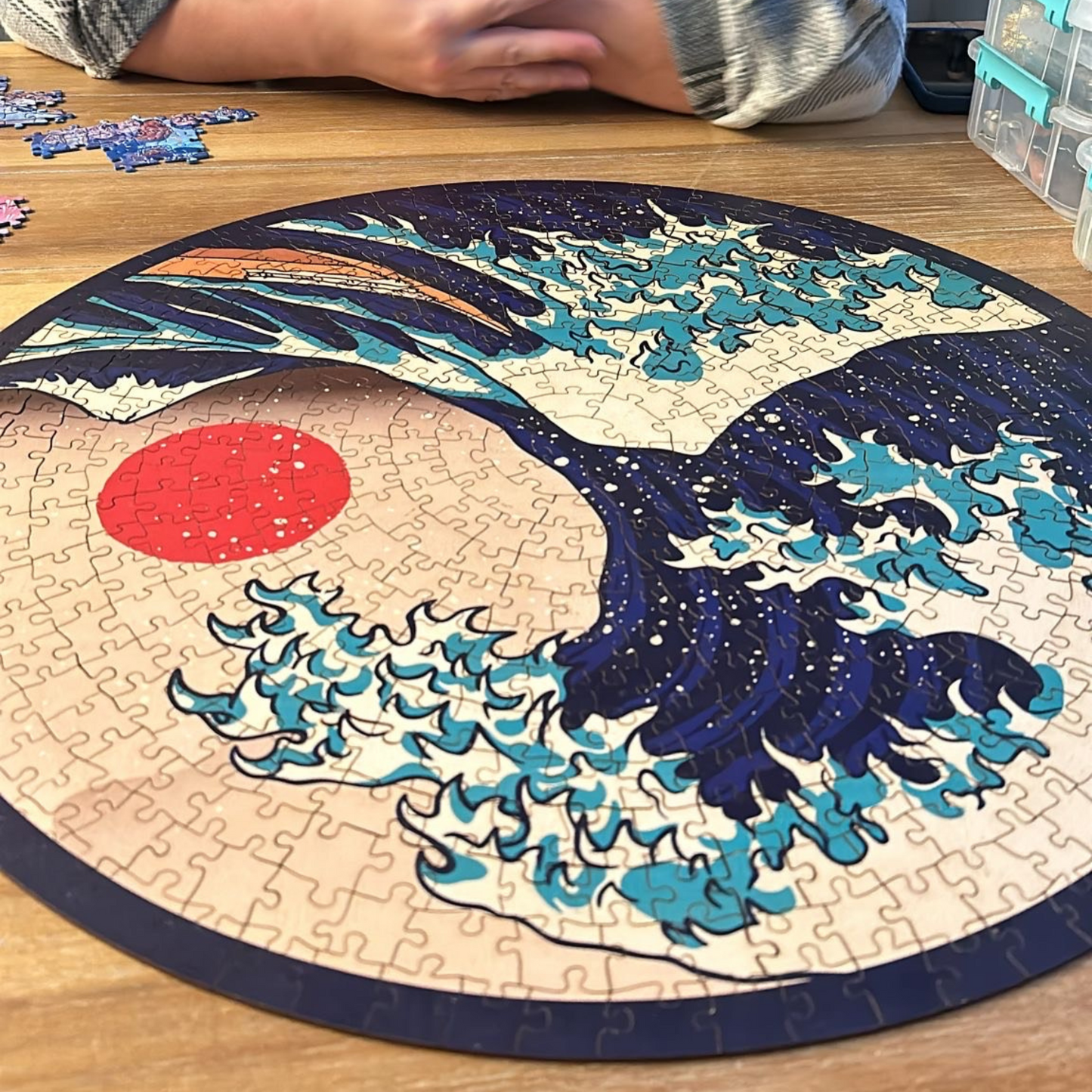
- Premium Quality: Crafted from durable 3mm (.14in) composite wood board for lasting enjoyment.
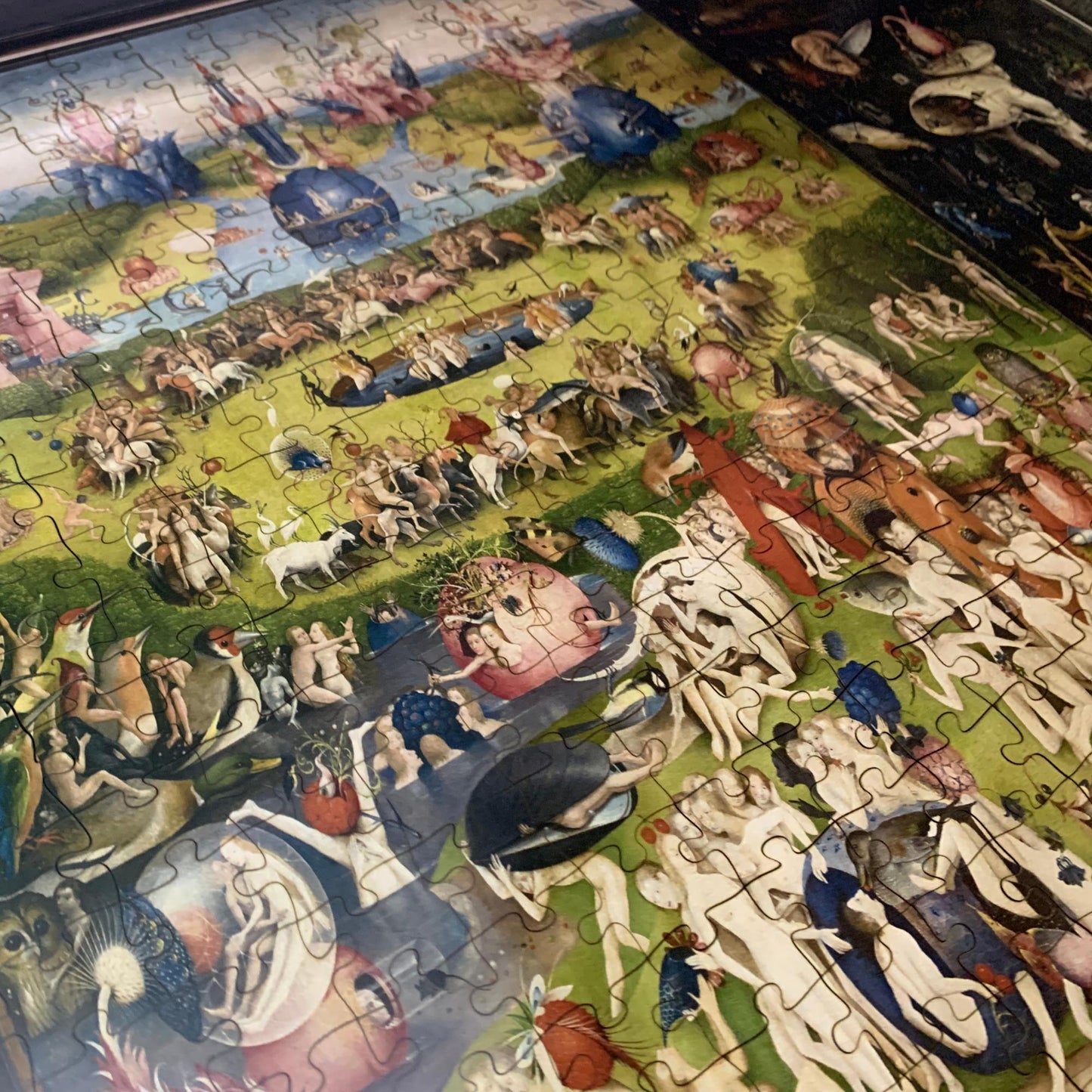
- Vibrant Imagery: High-resolution UV printing directly on the wood—no paper laminate—for stunning detail and vibrant colors.
- Eco-Conscious: Made with environmentally friendly materials.
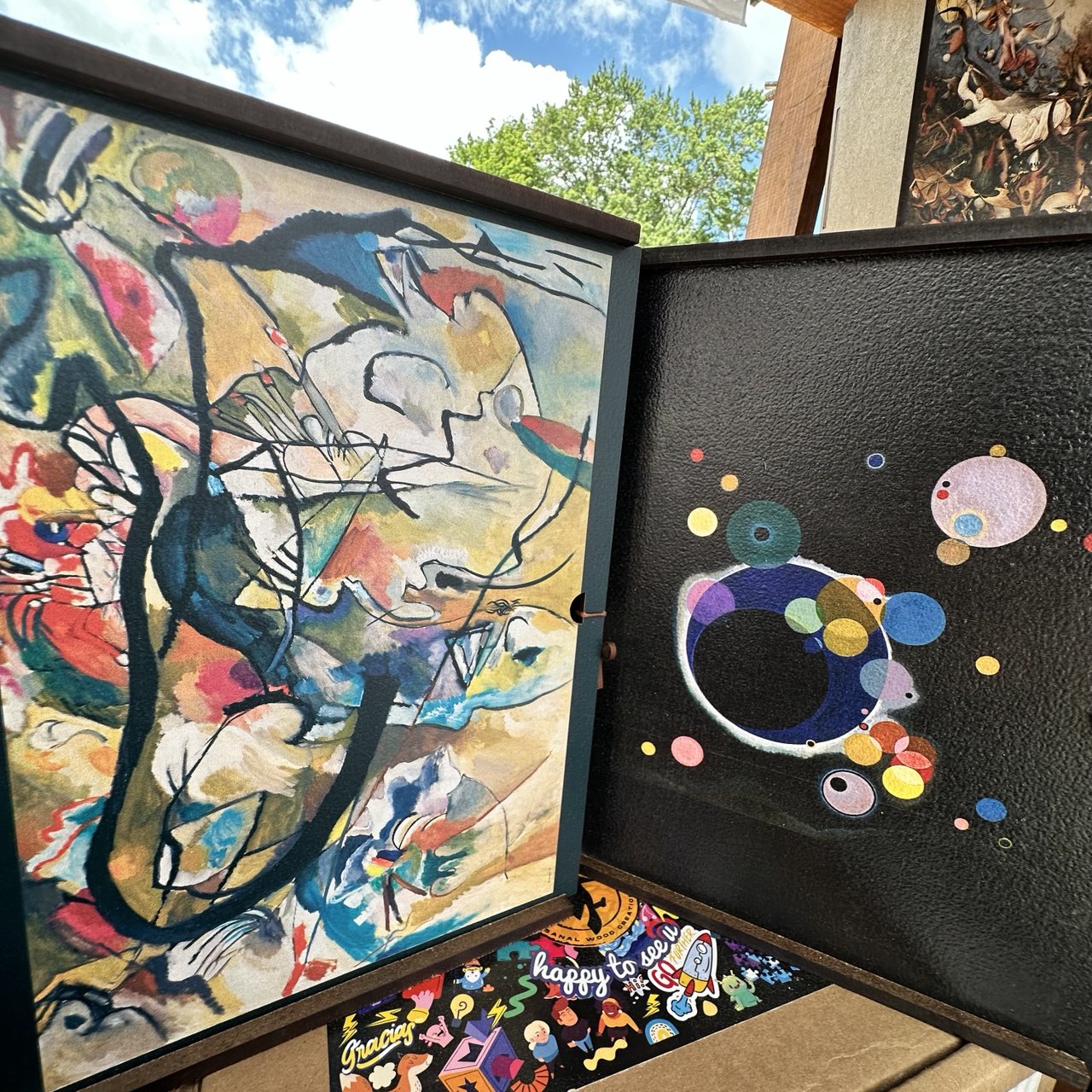
- Heirloom Keepsake: Your puzzle arrives beautifully packaged in a handcrafted wooden box, perfect for gifting or storing your masterpiece.
Craftsmanship and Care:
Craftsmanship and Care:
Experience the satisfying click of perfectly interlocking pieces. Our state-of-the-art laser cutting ensures precise fit and a smooth, seamless puzzle-solving experience. The perfect upgrade from cardboard without breaking the bank.
- Natural Laser Residue: A small amount of harmless black residue from the laser cutting process may be present. Simply wipe it away with a damp cloth.
- Hand-Finished Details: Each puzzle board, each wooden box are all carefully hand-stained, painted, and glued.
Satisfaction Guaranteed:
Satisfaction Guaranteed:
We are confident in the quality of our puzzles. If you are not completely satisfied, we offer a full refund or exchange.
PLEASE NOTE:
Each puzzle is crafted to make the most of your chosen size. Artwork may be subtly adjusted to meet our material and production standards while honoring the original work. Planning to frame yours? Email info@whatawoodwork.com for final measurements.
Couldn't load pickup availability
In stock
 PRODUCT DESCRIPTION
The Intruder — Wooden Jigsaw Puzzle
Fitzgerald was called "Fairy Fitzgerald" by his contemporaries, and not entirely as a compliment. The Victorian art establishment was suspicious of him. He painted fairies obsessively, in watercolor and bodycolor, with a density of detail that felt less like imagination and more like documentation. Some of his peers assumed opium. Nobody could quite explain the light.
📖 The Story Behind This Piece
Painted around 1865, "The Intruder" belongs to a moment when Victorian society was genuinely unsettled by fairy painting. Not charmed by it, unsettled. The genre carried a fringe reputation, associated with altered states, folklore taken too seriously, and a kind of seeing that polite culture preferred to keep at arm's length. Fitzgerald leaned into all of it. The woodland here is not safe or decorative. Something has entered the frame uninvited, and the fairies know it. The colors are vivid to the point of agitation, a quality the watercolor and bodycolor technique made possible and that Fitzgerald pushed further than almost anyone working in the genre.
John Anster Fitzgerald (1819–1906) spent most of his career painting a world that his audience half-believed in and half-feared. What made him distinct from other fairy painters was his refusal to make the supernatural comfortable. His fairies observe. They react. Whether opium played a role in that particular quality of attention is debated among art historians, but the paintings themselves carry an urgency that sits outside normal decorative work. "The Intruder" is now held at the Chazen Museum of Art at the University of Wisconsin-Madison, acquired from the collection of Stanley J. Seeger, Jr.
The woodland floor of "The Intruder" is where the puzzle gets demanding. Fitzgerald layered color over color in the foliage, and UV printing directly onto wood preserves that density without the washout that paper laminate produces. Where a reproduction might flatten the mid-tones in the undergrowth into a single muddy zone, the wooden surface holds the distinction between shadow and leaf, between bark and moss. Assembling that section means working with subtle shifts in green and brown that only separate clearly once pieces are in hand. The difference between two nearly identical pieces becomes tactile before it becomes visual.
🎁 Who Gets One of These
A few kinds of people reliably end up here.
✔️ The Victorian art reader who owns Richard Dadd's biography — You already know the fairy painting movement was stranger and darker than the gift-shop version suggests. Fitzgerald belongs on that shelf.
✔️ The museum member who bought something in the gift shop and regretted the quality — Chazen has this painting. Now you can have a version that holds up under scrutiny, at a fraction of what comparable puzzle makers charge.
✔️ The fantasy illustrator who studies source material — Fitzgerald's compositional choices and his handling of light in crowded woodland scenes are worth spending real time with. Assembly is one way to do that.
✔️ The person who wants to give something genuinely considered — Not a book, not a print. Something that takes weeks to arrive because it didn't exist until someone ordered it, and that stays in the house long after it's finished.
✔️ The adult who came back to puzzles during a difficult season and never left — Cardboard started feeling disposable. Wood doesn't.
Works well as a birthday or holiday gift for anyone who collects art, reads Victorian history, or has graduated from mass-market puzzles. The wooden keepsake box makes it self-contained as a gift object — no additional wrapping architecture required.
🧩 Puzzle Specifications
✔️ Precision laser-cut wooden pieces
✔️ 3mm MDF core — rigid, warp-resistant, built to last
✔️ UV printing directly on wood — no paper laminate, no peeling
✔️ Traditional grid-cut design
✔️ Sizes: 15"x23", 18"x24", 23"x31"
✔️ Piece counts: 300–1000
✔️ Handcrafted wooden keepsake box included
✔️ Made to order — ships in 3–4 weeks
💎 Why This Puzzle Lasts
Most wooden puzzle makers charge $300–$500. The craft justifies it. We get there differently: direct manufacturing, no wholesale chain, made to order. Same materials. No markup passed along from a distributor who never touched the thing.
The 3mm MDF core is what keeps pieces clicking cleanly years from now. Cardboard compresses. It absorbs humidity and warps. MDF doesn't, which means the fit that exists on day one still exists a decade later. UV printing goes directly onto the wood surface, bypassing the paper laminate that eventually separates, fades, or bubbles under handling. With Fitzgerald's layered colors, that matters. The pigment saturation in "The Intruder" survives the process intact.
The traditional grid cut means pieces interlock with a satisfying resistance and a clean snap, without the novelty shapes that sacrifice structural integrity for a gimmick. The handcrafted wooden keepsake box is built to the same standard as the puzzle itself, not an afterthought. Most people keep it. Once the puzzle is framed or stored, the box holds something else entirely. Production begins when you order. Nothing about your puzzle existed in a warehouse before you wanted it.