


Russia's Atlantis — Gorbatov's Invisible City of Kitezh Wooden Puzzle
Russia's Atlantis — Gorbatov's Invisible City of Kitezh Wooden Puzzle
- Regular price
- Price: $115.00
- Regular price
- List Price: $0.00
- Sale price
- Price: $115.00
- Unit price
- per
Key Features:
Key Features:
- Premium Quality: Crafted from durable 3mm (.14in) composite wood board for lasting enjoyment.
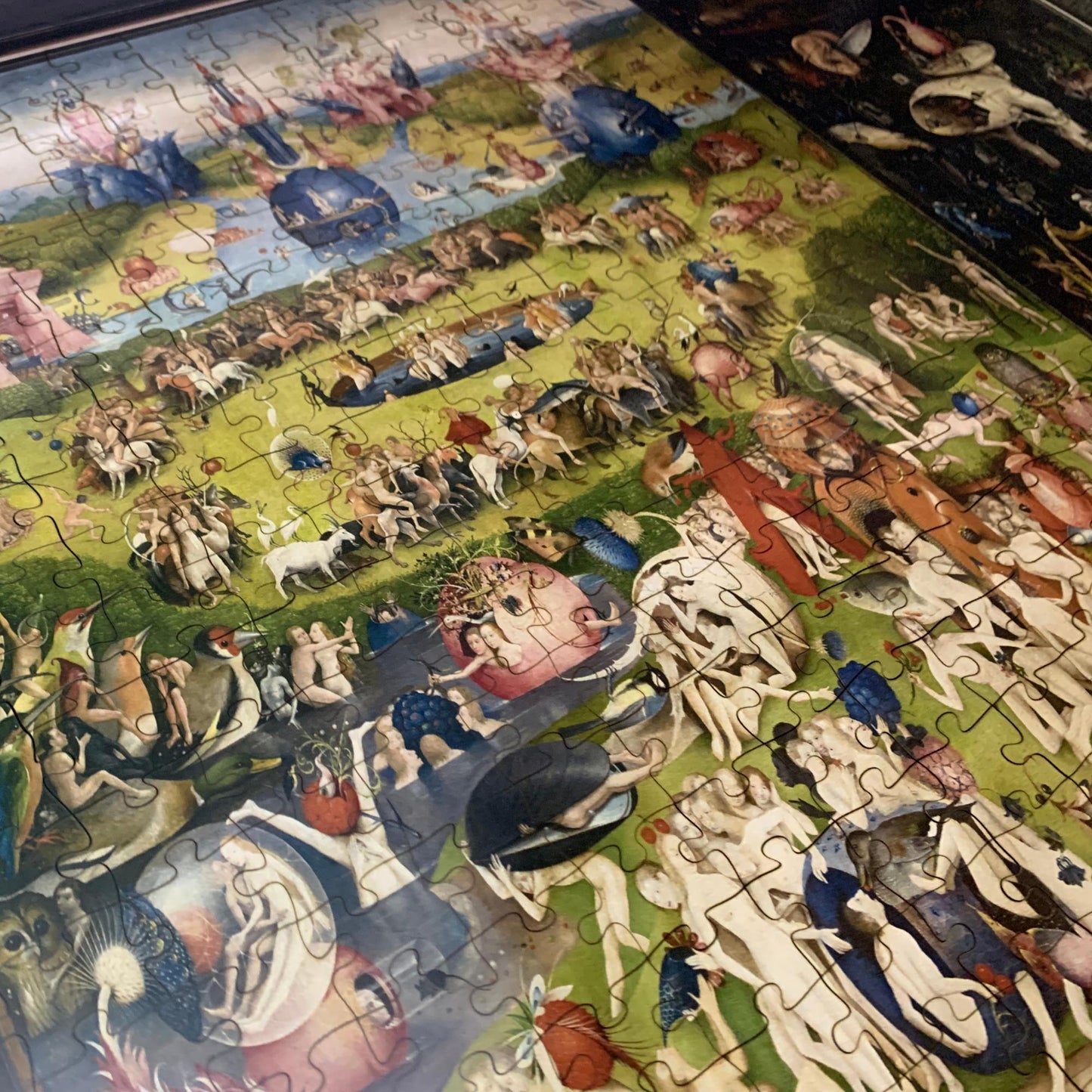
- Vibrant Imagery: High-resolution UV printing directly on the wood—no paper laminate—for stunning detail and vibrant colors.
- Eco-Conscious: Made with environmentally friendly materials.
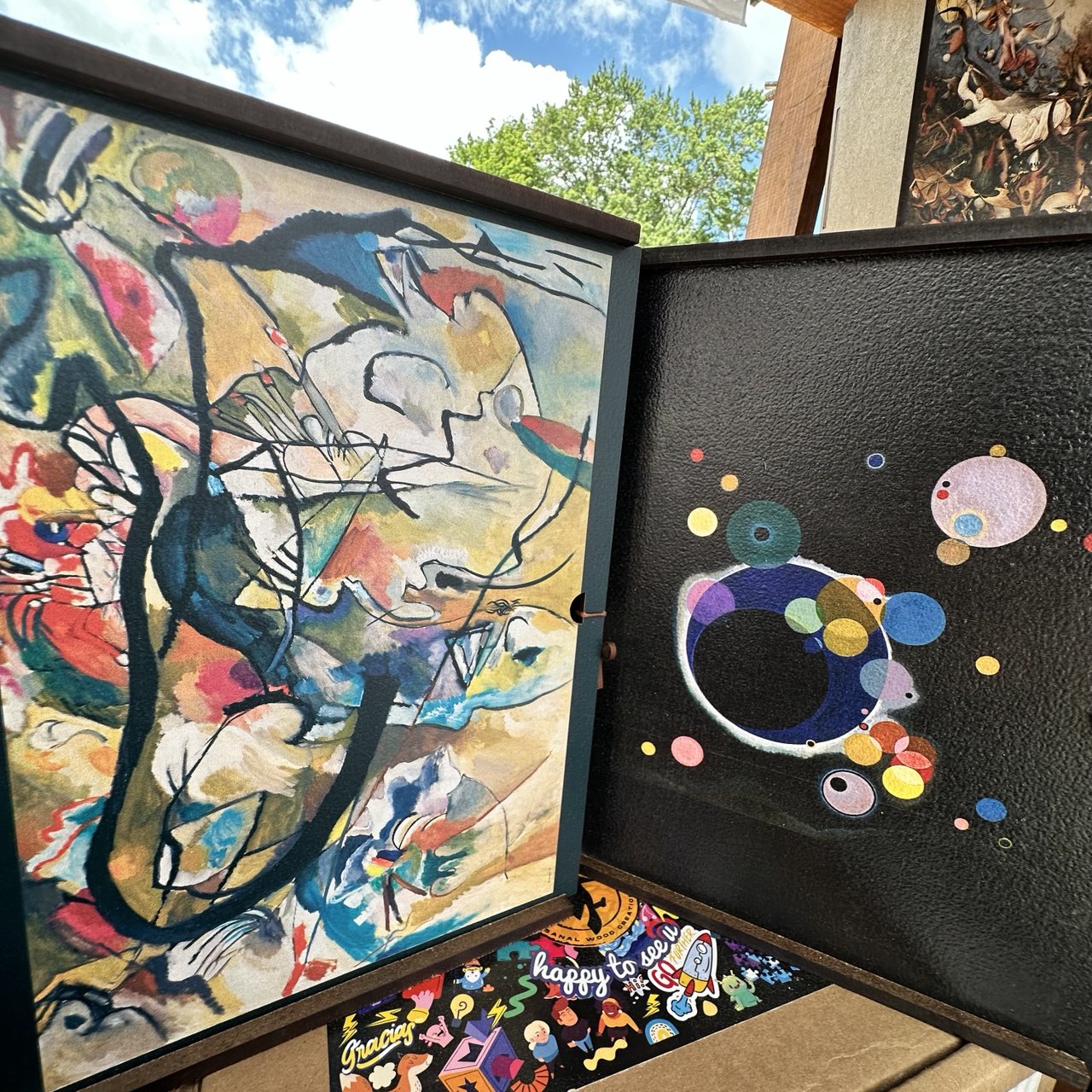
- Heirloom Keepsake: Your puzzle arrives beautifully packaged in a handcrafted wooden box, perfect for gifting or storing your masterpiece.
Craftsmanship and Care:
Craftsmanship and Care:
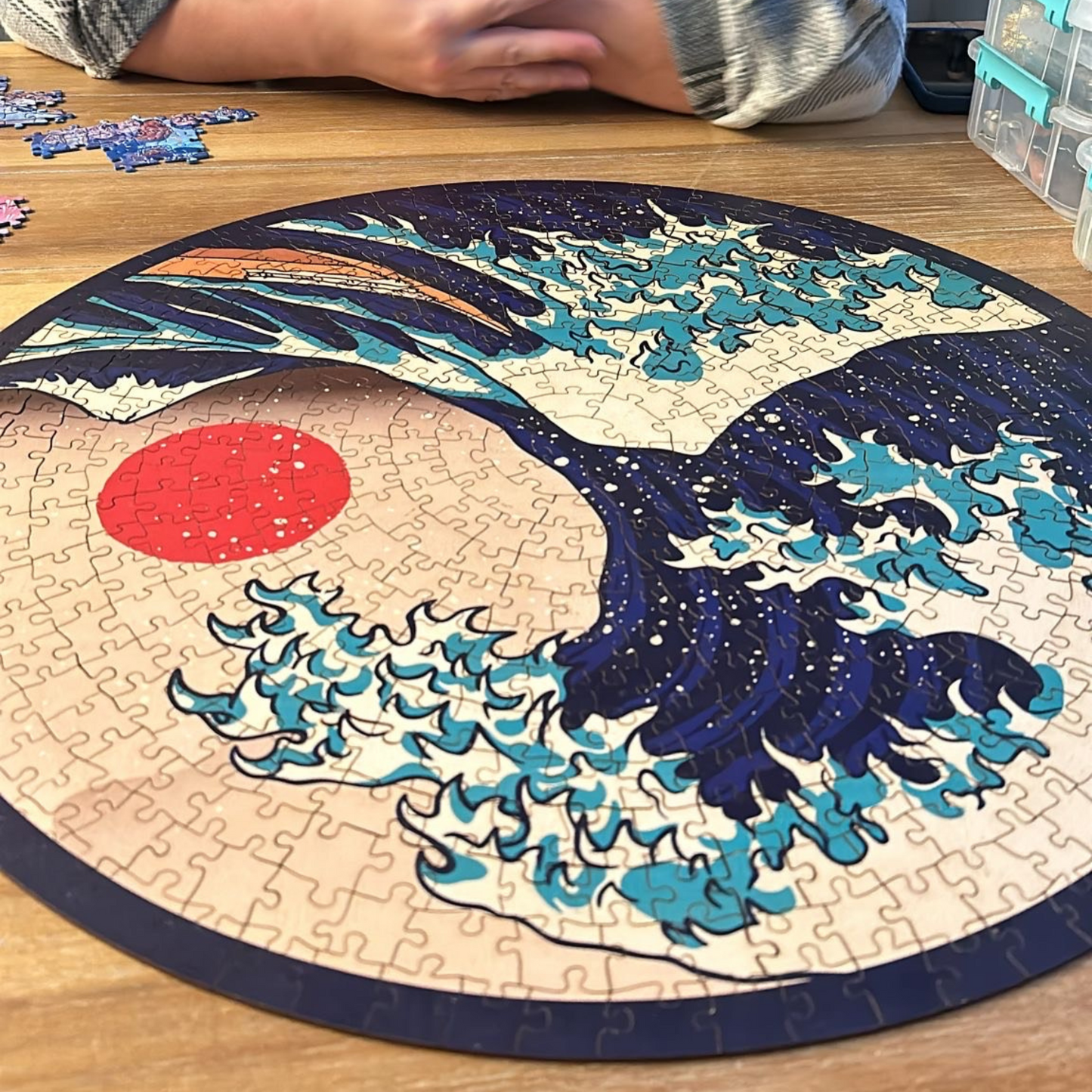
Experience the satisfying click of perfectly interlocking pieces. Our state-of-the-art laser cutting ensures precise fit and a smooth, seamless puzzle-solving experience. The perfect upgrade from cardboard without breaking the bank.
- Natural Laser Residue: A small amount of harmless black residue from the laser cutting process may be present. Simply wipe it away with a damp cloth.
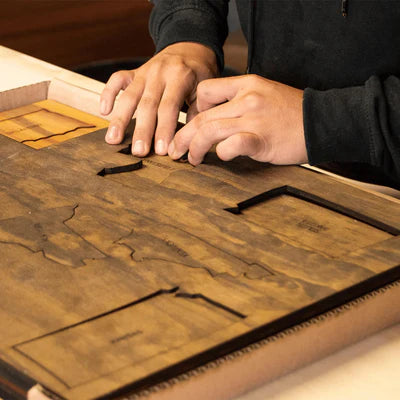
- Hand-Finished Details: Each puzzle board, each wooden box are all carefully hand-stained, painted, and glued.
Satisfaction Guaranteed:
Satisfaction Guaranteed:
We are confident in the quality of our puzzles. If you are not completely satisfied, we offer a full refund or exchange.
PLEASE NOTE:
Each puzzle is crafted to make the most of your chosen size. Artwork may be subtly adjusted to meet our material and production standards while honoring the original work. Planning to frame yours? Email info@whatawoodwork.com for final measurements.
Couldn't load pickup availability
In stock
 PRODUCT DESCRIPTION
When Mongol invaders came, Kitezh prayed — and sank beneath the lake forever. Russia's most haunting legend, painted by Gorbatov in 1913. Premium wooden puzzle. The Invisible City of Kitezh — Wooden Jigsaw Puzzle
In June 2021, this painting sold at Christie's London for £525,000. Gorbatov made it in 1913, returned to the same subject in 1933, and the two versions ended up in different countries. The subject is a city that chose to drown rather than surrender. According to Russian folklore, you can still hear its bells on quiet nights at Lake Svetloyar.
📖 The Story Behind This Piece
Gorbatov painted this in 1913, eleven years before he left Russia for good. The legend behind it is specific: during the Mongol invasion of the 13th century, the city of Kitezh sank into Lake Svetloyar rather than fall. Gone, but not destroyed. Gorbatov sets the scene not in the moment of submersion but in the life before it — the massive timber barges called belyany moving along the Volga, broad and unhurried, against a sky that already knows something the figures on the water do not.
Gorbatov spent years painting the Volga. Not as a backdrop, but as the subject. He understood the river as a working environment, and that specificity is what keeps the myth from going soft. He believed the mythological and the documentary could occupy the same canvas without either canceling the other out. The belyany are documented fact. The drowning city is legend. He painted both as though they were equally real.
The color is where the puzzle gets complicated. Gorbatov's palette in this period ran hot and atmospheric at once — deep golds and muted blues occupying the same passage of sky. In digital reproduction, those transitions flatten. On the laser-cut wood, printed directly with UV ink, the gradations hold. Assembling the water sections means working through color relationships that are only visible at piece scale: two pieces that look identical in thumbnail are clearly different when you hold them.
🎁 Who Gets One of These
A few kinds of people gravitate toward this one specifically.
✔️ The Russian art collector who knows Repin but not Gorbatov — A Post-Impressionist working the Volga in 1913 is a different tradition than the Wanderers, and this piece sits at that exact crossover point.
✔️ The folklore reader with a shelf of Slavic mythology — Kitezh appears in Rimsky-Korsakov's 1907 opera and in Leskov. Someone who knows those sources will notice what Gorbatov chose to include and what he left out.
✔️ The museum member who gravitates toward pre-Revolutionary Russian rooms — Gorbatov emigrated in 1922 and this 1913 work comes from just before everything changed. That context is in the painting whether you go looking for it or not.
✔️ The gift-giver who wants something that opens a conversation, not just a box — A painting with a £525,000 auction record, a drowning city, and a river barge on the same canvas gives people somewhere to go.
✔️ The puzzle buyer who has finished the standard fantasy art options and wants more friction — The atmospheric color work here is a harder solve than high-contrast illustration. Intentional difficulty, not accidental.
Works well as a birthday or anniversary gift for anyone with a serious interest in Russian history or art history. A strong winter holiday choice for the person who already has everything they need and wants something worth looking at for years.
🧩 Puzzle Specifications
✔️ Precision laser-cut wooden pieces
✔️ 3mm MDF core — rigid, warp-resistant, built to last
✔️ UV printing directly on wood — no paper laminate, no peeling
✔️ Traditional grid-cut design
✔️ Handcrafted wooden keepsake box included
✔️ Made to order — ships in 3–4 weeks
💎 Why This Puzzle Lasts
Most wooden puzzle makers charge $300–$500. The craft justifies it. We get there differently: direct manufacturing, no wholesale chain, made to order. Same materials, no markup.
The core is 3mm MDF — noticeably heavier than cardboard, noticeably more rigid. Pieces seat with a click that cardboard never produces and keeps producing years later because the core doesn't flex or absorb moisture. UV printing goes directly onto the wood surface. No paper laminate means no layer to bubble, peel, or yellow at the edges. The color in Gorbatov's sky, which moves through four or five distinct atmospheric states, stays exactly as printed.
The cut is a traditional grid — no novelty shapes, no irregular edges designed to look interesting in a product photo. What that means in practice is that the difficulty comes entirely from the image, not from the pieces themselves. The wooden keepsake box is built to the same standard as the puzzle. People keep it. After framing, the box holds the extra pieces, the reference card, or nothing at all. Made to order means no warehouse, no sitting inventory, no puzzle assembled six months ago. Yours is cut after you order it.
🖼️ After You Finish It
Most people frame it. The wooden box goes on a shelf, sometimes with the reference image visible through the lid. Guests ask about the painting before they ask about the puzzle, and then someone mentions the drowning city, and then someone else asks whether the bells are real. Gorbatov made two versions of Kitezh across twenty years. The first one, this one, sold for over half a million pounds. That fact tends to come up.