
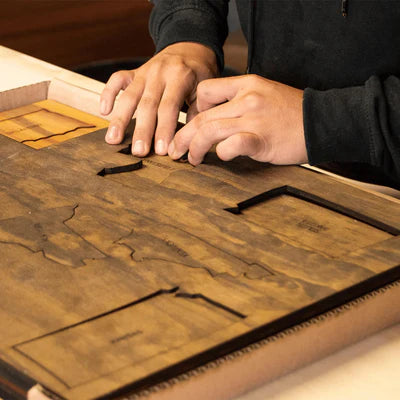


The Jacobin by Schachtzabel - Premium Wooden Puzzle
The Jacobin by Schachtzabel - Premium Wooden Puzzle
- Regular price
- Price: $115.00
- Regular price
- List Price: $0.00
- Sale price
- Price: $115.00
- Unit price
- per
Key Features:
Key Features:
- Premium Quality: Crafted from durable 3mm (.14in) composite wood board for lasting enjoyment.
- Vibrant Imagery: High-resolution UV printing directly on the wood—no paper laminate—for stunning detail and vibrant colors.
- Eco-Conscious: Made with environmentally friendly materials.
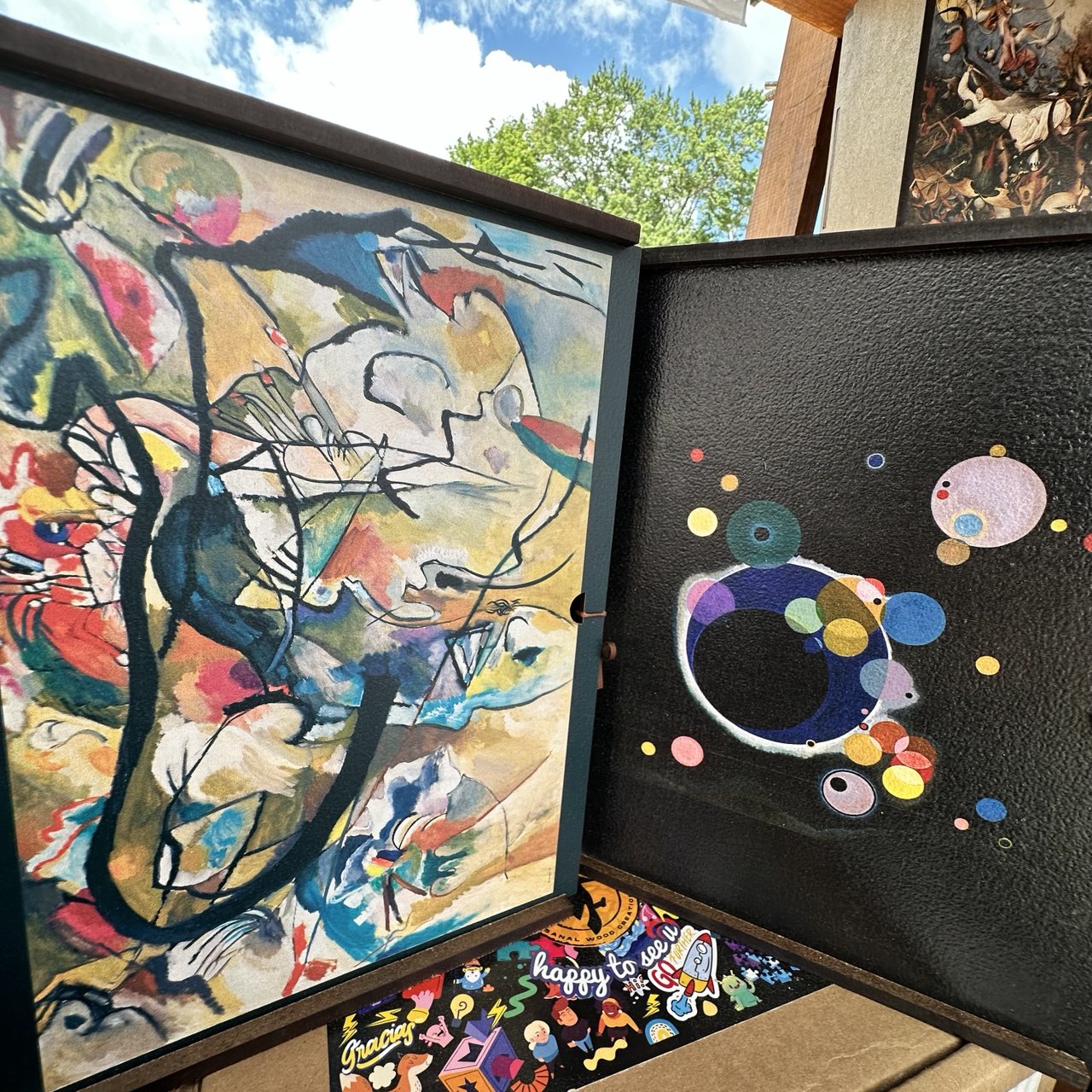
- Heirloom Keepsake: Your puzzle arrives beautifully packaged in a handcrafted wooden box, perfect for gifting or storing your masterpiece.
Craftsmanship and Care:
Craftsmanship and Care:
Experience the satisfying click of perfectly interlocking pieces. Our state-of-the-art laser cutting ensures precise fit and a smooth, seamless puzzle-solving experience. The perfect upgrade from cardboard without breaking the bank.
- Natural Laser Residue: A small amount of harmless black residue from the laser cutting process may be present. Simply wipe it away with a damp cloth.
- Hand-Finished Details: Each puzzle board, each wooden box are all carefully hand-stained, painted, and glued.
Satisfaction Guaranteed:
Satisfaction Guaranteed:
We are confident in the quality of our puzzles. If you are not completely satisfied, we offer a full refund or exchange.
PLEASE NOTE:
Each puzzle is crafted to make the most of your chosen size. Artwork may be subtly adjusted to meet our material and production standards while honoring the original work. Planning to frame yours? Email info@whatawoodwork.com for final measurements.
Couldn't load pickup availability
In stock
 PRODUCT DESCRIPTION
The Jacobin has been a documented breed for over four centuries. The drawing Schöner made of it is the best one.
Charles Darwin kept pigeons. Not casually — he bred them deliberately, corresponded with fanciers across Europe, and used the results to build the argument for natural selection.
The Jacobin was among the breeds he studied: a pigeon so altered by human hands that its hood of feathers nearly obscures its own face. Emil Schachtzabel drew it in 1906, and the drawing has never been bettered.
📖 The Story Behind This Piece
In the early 1900s, Germany had a serious pigeon problem — serious meaning obsessive, organized, and deeply competitive. Schachtzabel's Illustriertes Prachtwerk sämtlicher Taubenrassen, published in Würzburg around 1906, was the attempt to document every known breed with enough precision to settle arguments. The Jacobin plate shows the bird at full plumage: its hood, mane, and cascading chest feathers form a silhouette that resembles the cowl of a Dominican monk, which is exactly where the name comes from. The breed existed before Darwin. It will outlast the arguments he started.
Schachtzabel (1850–1941) ran the Federation of German Poultry Breeders and understood that a book like this required an artist, not just a technician. He brought in Anton Schöner, whose chromolithographic plates gave the work its authority. Schöner rendered feathers the way a botanist renders leaves: structurally, individually, with no shortcuts. The result was a scientific document that happens to be beautiful, which is rarer than it sounds.
The hood is where assembly gets interesting. Schöner painted the Jacobin's head feathers in overlapping layers of white, cream, and warm grey, with subtle distinctions between the mane and the chain that only become visible when you're working at piece scale. UV printing on wood brings out those tonal separations in a way a screen can't replicate — the ink sits in the grain rather than on top of it, so the lightest feathers hold their depth instead of washing out. That section of the bird will take longer than you expect, and correctly so.
🎁 Who Gets One of These
A few kinds of people buy this one, and they tend to know exactly why.
✔️ The Darwin reader who's been through the pigeon chapters twice — You know why he kept them. Now you have the definitive 1906 portrait of one of the breeds he documented, rendered at a scale where the selective breeding is visible feather by feather.
✔️ The ornithologist with framed prints already on the wall — Scientific illustration from this era is the intersection of field accuracy and fine art. Schöner's chromolithographic technique put both in the same plate, and Schachtzabel's book remains the standard reference.
✔️ The natural history collector who owns things from the Jugendstil period — Published in Würzburg around 1906, this plate sits squarely in the era when German scientific publishing was producing some of its most visually arresting work.
✔️ The puzzle buyer who has outgrown gradients and photographic landscapes — Zoological illustration offers a different kind of solving: deliberate tonal zones, clean outlines, a subject with structure. The feathering patterns on the Jacobin's hood give you real anchors.
✔️ The gift-giver for a retiring biology teacher or museum curator — Specific enough to mean something, beautiful enough to frame, substantial enough to feel like a considered choice rather than a placeholder.
Birthdays for natural history collectors. Retirement gifts for birders, ornithologists, and biology educators. A meaningful choice for anyone who has spent real time with Darwin's work on artificial selection and wants something that connects to it directly.
🧩 Puzzle Specifications
✔️ Precision laser-cut wooden pieces
✔️ 3mm MDF core — rigid, warp-resistant, built to last
✔️ UV printing directly on wood — no paper laminate, no peeling
✔️ Traditional grid-cut design
✔️ Sizes: 15"x23", 18"x24", 23"x31"
✔️ Piece counts: 300–1000
✔️ Handcrafted wooden keepsake box included
✔️ Made to order — ships in 3–4 weeks
💎 Why This Puzzle Lasts
Most wooden puzzle makers charge $300–$500. The craft justifies it. We get there differently: direct manufacturing, no wholesale chain, made to order. Same materials. No markup passed down from a distributor who never touched the product.
The core is 3mm MDF — dense, rigid, and dimensionally stable in a way cardboard stops being after a few years of humidity changes. Pieces click into place with a firmness that doesn't degrade. UV ink bonds directly to the wood surface rather than sitting on a paper laminate, so there's nothing to peel, bubble, or yellow. Schöner's warm greys and soft backgrounds will look the same in twenty years as they do today.
The cut follows a traditional grid pattern, which means pieces interlock cleanly and sorting stays logical — no novelty shapes competing with the image for your attention. When the puzzle is done, it goes into a handcrafted wooden box that's built to the same standard as the puzzle itself. People keep the box. Some use it for the puzzle again; others find other uses for it, and the puzzle goes on the wall. Orders are made to order, one at a time, which is why the wait is three to four weeks. There's no warehouse. No overstock. No puzzle sitting in a box for two years before it reaches you.