


The Lantern Ghost — Hokusai's Oiwa Woodblock Wooden Puzzle
The Lantern Ghost — Hokusai's Oiwa Woodblock Wooden Puzzle
- Regular price
- Price: $115.00
- Regular price
- List Price: $0.00
- Sale price
- Price: $115.00
- Unit price
- per
Key Features:
Key Features:
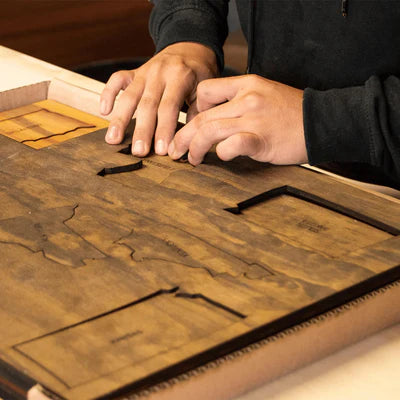
- Premium Quality: Crafted from durable 3mm (.14in) composite wood board for lasting enjoyment.
- Vibrant Imagery: High-resolution UV printing directly on the wood—no paper laminate—for stunning detail and vibrant colors.
- Eco-Conscious: Made with environmentally friendly materials.
- Heirloom Keepsake: Your puzzle arrives beautifully packaged in a handcrafted wooden box, perfect for gifting or storing your masterpiece.
Craftsmanship and Care:
Craftsmanship and Care:
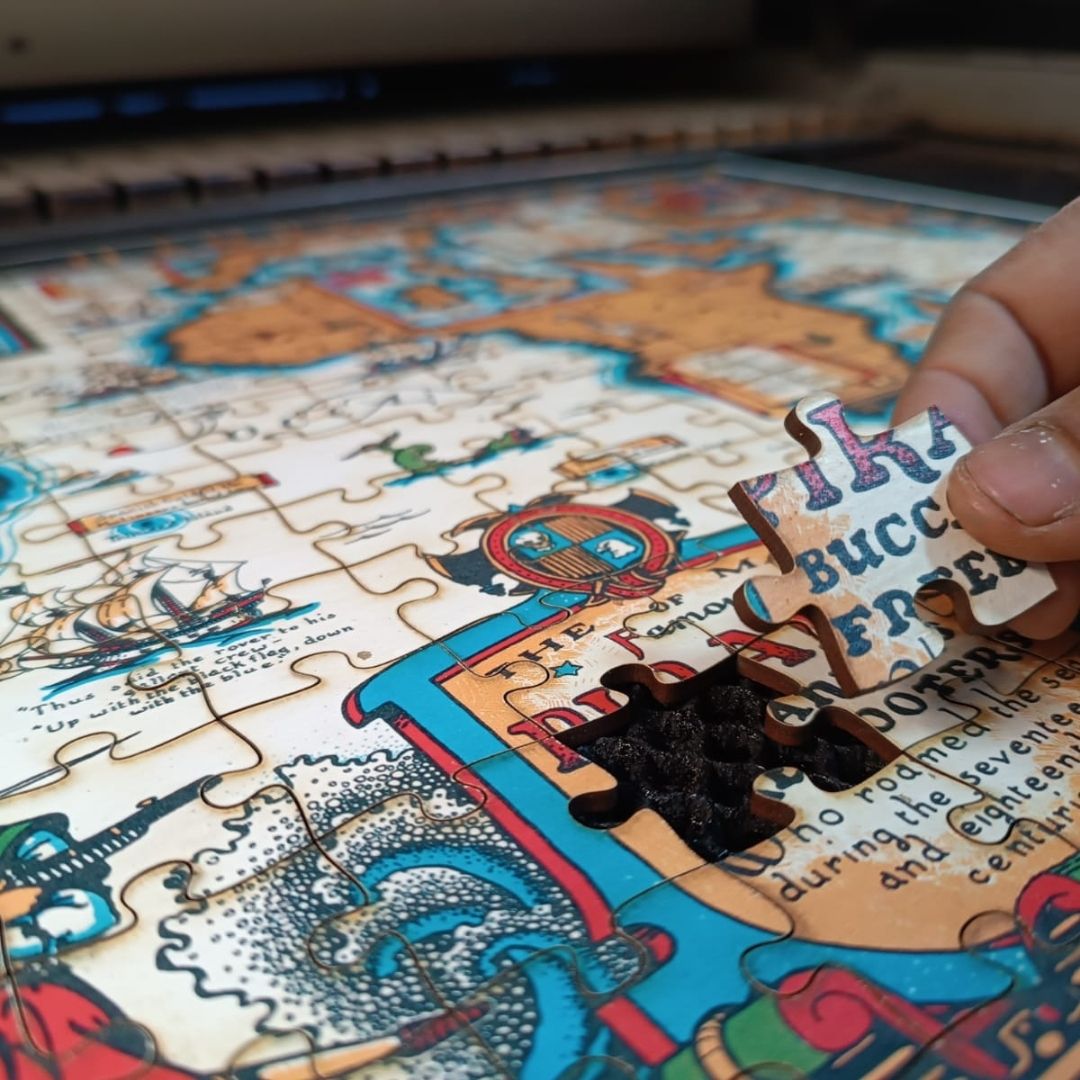
Experience the satisfying click of perfectly interlocking pieces. Our state-of-the-art laser cutting ensures precise fit and a smooth, seamless puzzle-solving experience. The perfect upgrade from cardboard without breaking the bank.
- Natural Laser Residue: A small amount of harmless black residue from the laser cutting process may be present. Simply wipe it away with a damp cloth.
- Hand-Finished Details: Each puzzle board, each wooden box are all carefully hand-stained, painted, and glued.
Satisfaction Guaranteed:
Satisfaction Guaranteed:
We are confident in the quality of our puzzles. If you are not completely satisfied, we offer a full refund or exchange.
PLEASE NOTE:
Each puzzle is crafted to make the most of your chosen size. Artwork may be subtly adjusted to meet our material and production standards while honoring the original work. Planning to frame yours? Email info@whatawoodwork.com for final measurements.
Couldn't load pickup availability
In stock
 PRODUCT DESCRIPTION
The Ghost of Oiwa from the One Hundred Ghost Stories — Wooden Jigsaw Puzzle
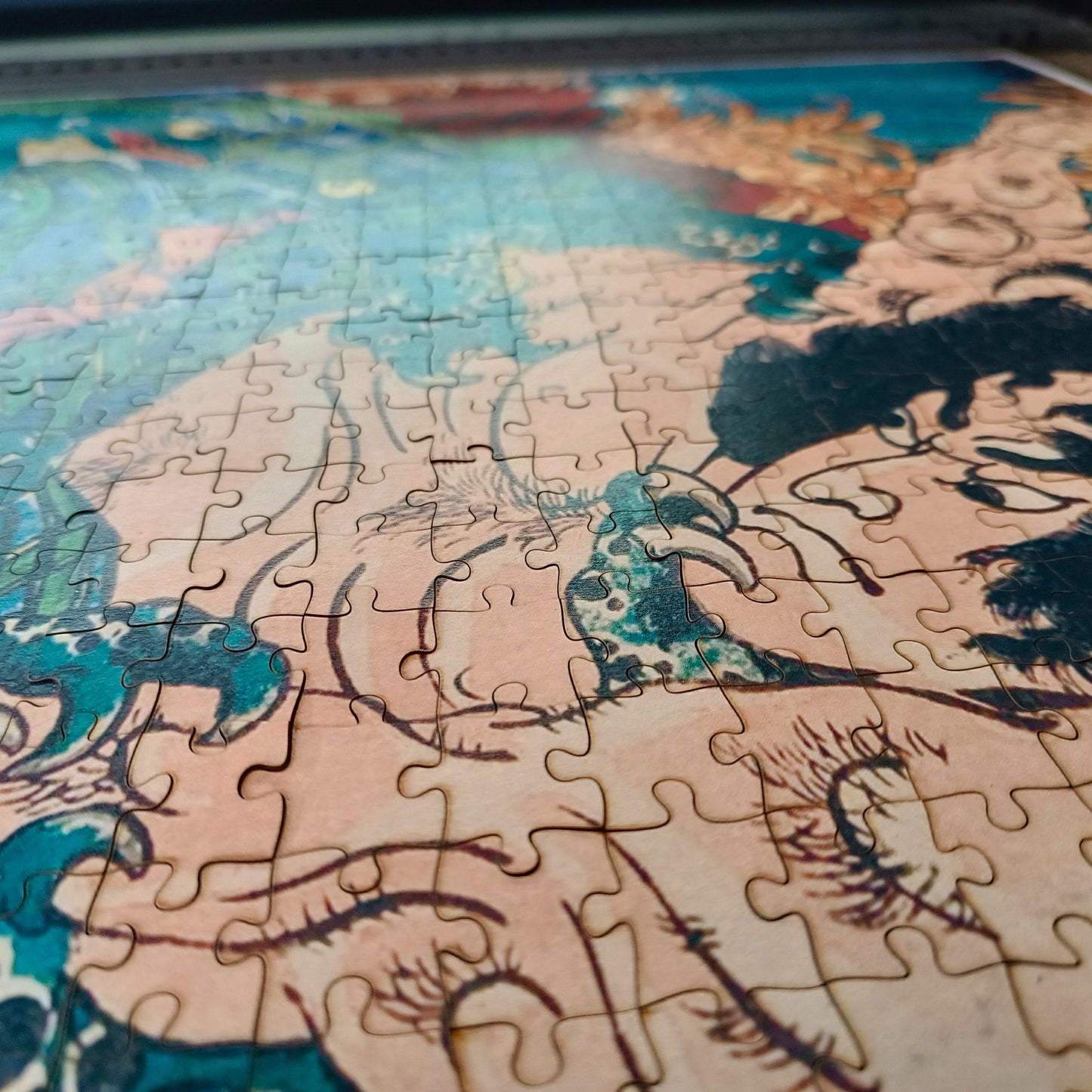
Hokusai's publisher commissioned one hundred ghost story prints. Only five were ever made. "The Ghost of Oiwa" is one of them. In it, Oiwa's spirit doesn't float above a grave or haunt a corridor. She is the paper lantern — her drooping eyes and gaping mouth formed by the lantern's own folds and creases, as if the object itself has been poisoned by her story.
📖 The Story Behind This Piece
Made around 1831–1832, during the height of the Edo period, the print comes from the kabuki play "Yotsuya Kaidan," which Japanese audiences already knew by heart. Oiwa's husband Iemon poisons her. Her face distorts grotesquely before she dies. She comes back. Hokusai's contribution isn't the story — it's where he puts her. Not behind a husband's shoulder, not rising from water. Inside a paper lantern, her face warped into the lamp's own structure, so the light source becomes the haunting. The chūban print measures roughly 26 by 19 centimeters. The concept is bigger than that.
Hokusai was past seventy when he made these prints. He had already produced the Thirty-Six Views of Mount Fuji. He didn't need to do ghost stories. His decision to work in the "kaidan" tradition — folklore horror, deeply vernacular, not considered elevated subject matter — says something about what he actually believed art was for. He thought visual narrative had to work on a gut level first. The Ghost of Oiwa works on a gut level.
The lantern section of the image is where assembly gets strange. Digitally, you register the face. In pieces, you're sorting warm amber tones and near-black shadows that all look similar until they don't. The UV printing on the wood deepens the contrast in the dark passages — the shadows in the lantern's folds have a density that doesn't flatten the way printed paper does. At a certain point during assembly, the face resolves out of what looked like abstract dark shapes, and it lands differently than it does on a screen.
🎁 Who Gets One of These
A few specific people come to mind.
✔️ The collector who's been following Hokusai past the obvious work — You own something from the Fuji series or know someone who does. "The Ghost of Oiwa" is from a set of five prints that most people have never seen. That ratio matters to you.
✔️ The kabuki or Japanese theater enthusiast — Yotsuya Kaidan is still performed. Hokusai made this print while the play was in active repertoire, for an audience who already knew exactly what Oiwa looked like. Having the image on your wall means something different when you know that context.
✔️ The folklore researcher or Japanese studies scholar — Edo-period ghost taxonomy is its own discipline. Oiwa is an onryō — a specifically female vengeful spirit, a category with its own conventions. Hokusai broke several of them.
✔️ The person who buys thoughtful Halloween gifts — Not novelty. Not cute-spooky. A 190-year-old woodblock print of one of Japan's most enduring supernatural narratives, rendered on wood, in a handcrafted box. That's a different category of gift.
✔️ The friend who introduced you to Japanese horror — Films, fiction, folklore — they got there first and went deep. A primary-source image from 1831 is the kind of thing they don't already own.
Works well as a Halloween gift or autumn occasion present, where the subject fits without forcing it. Also strong for Japanese art collectors' birthdays, or as a considered gift for someone finishing a degree in East Asian studies or art history.
🧩 Puzzle Specifications
✔️ Precision laser-cut wooden pieces
✔️ 3mm MDF core — rigid, warp-resistant, built to last
✔️ UV printing directly on wood — no paper laminate, no peeling
✔️ Traditional grid-cut design
✔️ Sizes: 15"x23", 18"x24", 23"x31"
✔️ Piece counts: 300–1000
✔️ Handcrafted wooden keepsake box included
✔️ Made to order — ships in 3–4 weeks
💎 Why This Puzzle Lasts
Most wooden puzzle makers charge $300–$500. The craft justifies it on their end. WAWW gets to the same materials through direct manufacturing and no wholesale markup. Made to order means zero warehouse sitting, zero waste, and a price that reflects what the thing actually costs to make well.
The 3mm MDF core is what separates wooden puzzles from cardboard ones in practical terms. Pieces stay flat. They click together cleanly and stay clicked. A cardboard puzzle left assembled on a table overnight warps. MDF doesn't. The pieces you sort today will fit the same way in twenty years. UV printing goes directly onto the wood surface rather than onto a paper layer that gets glued on top. No laminate means no peeling edge, no fading, and no color shift over time. With a print like "The Ghost of Oiwa," where the warm lantern amber and the near-black shadows carry the entire emotional weight of the image, color integrity isn't a minor detail.
The traditional grid cut means pieces have genuine resistance and genuine click. No gimmick shapes to distract from the image. Solving it is about the image, not the format. When the puzzle is finished, the handcrafted wooden box becomes storage that people actually keep. Not because they're told to, but because it's a better object than most things on a shelf. Made-to-order means your puzzle doesn't exist yet. It gets made when you place the order, which is why the wait is three to four weeks and why the quality is consistent.