


The Plate Mansion Ghost — Hokusai Woodblock Wooden Puzzle
The Plate Mansion Ghost — Hokusai Woodblock Wooden Puzzle
- Regular price
- Price: $115.00
- Regular price
- List Price: $0.00
- Sale price
- Price: $115.00
- Unit price
- per
Key Features:
Key Features:
- Premium Quality: Crafted from durable 3mm (.14in) composite wood board for lasting enjoyment.
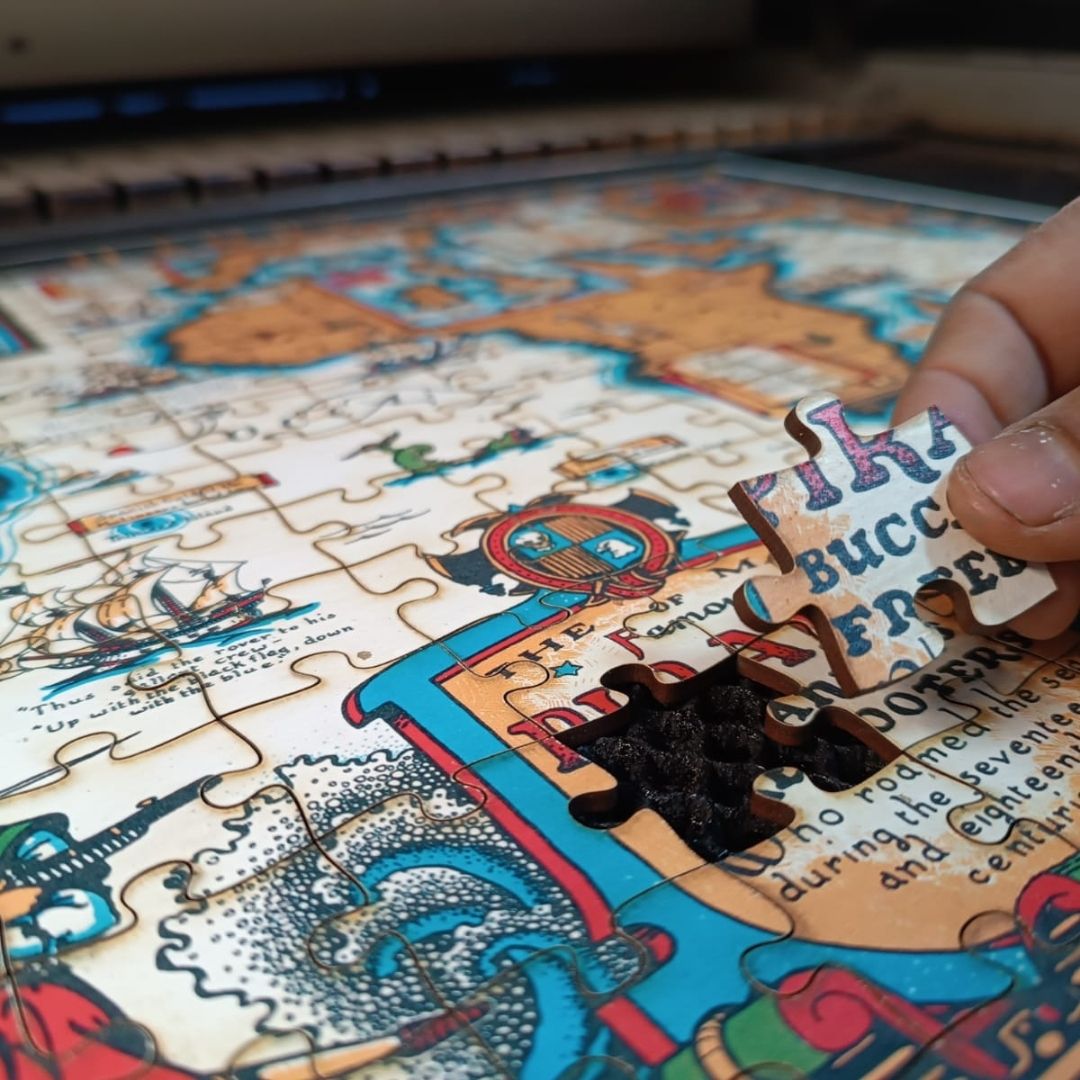
- Vibrant Imagery: High-resolution UV printing directly on the wood—no paper laminate—for stunning detail and vibrant colors.
- Eco-Conscious: Made with environmentally friendly materials.
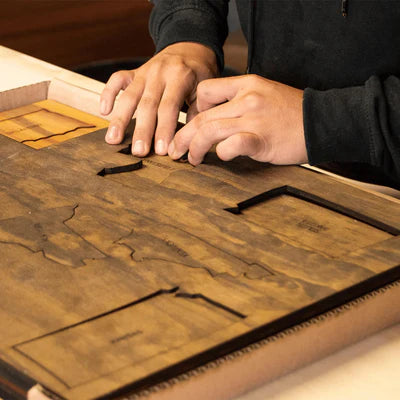
- Heirloom Keepsake: Your puzzle arrives beautifully packaged in a handcrafted wooden box, perfect for gifting or storing your masterpiece.
Craftsmanship and Care:
Craftsmanship and Care:
Experience the satisfying click of perfectly interlocking pieces. Our state-of-the-art laser cutting ensures precise fit and a smooth, seamless puzzle-solving experience. The perfect upgrade from cardboard without breaking the bank.
- Natural Laser Residue: A small amount of harmless black residue from the laser cutting process may be present. Simply wipe it away with a damp cloth.
- Hand-Finished Details: Each puzzle board, each wooden box are all carefully hand-stained, painted, and glued.
Satisfaction Guaranteed:
Satisfaction Guaranteed:
We are confident in the quality of our puzzles. If you are not completely satisfied, we offer a full refund or exchange.
PLEASE NOTE:
Each puzzle is crafted to make the most of your chosen size. Artwork may be subtly adjusted to meet our material and production standards while honoring the original work. Planning to frame yours? Email info@whatawoodwork.com for final measurements.
Couldn't load pickup availability
In stock
 PRODUCT DESCRIPTION
The Mansion of the Plates (Sara-yashiki) by Katsushika Hokusai — Japanese Art Wooden Jigsaw Puzzle
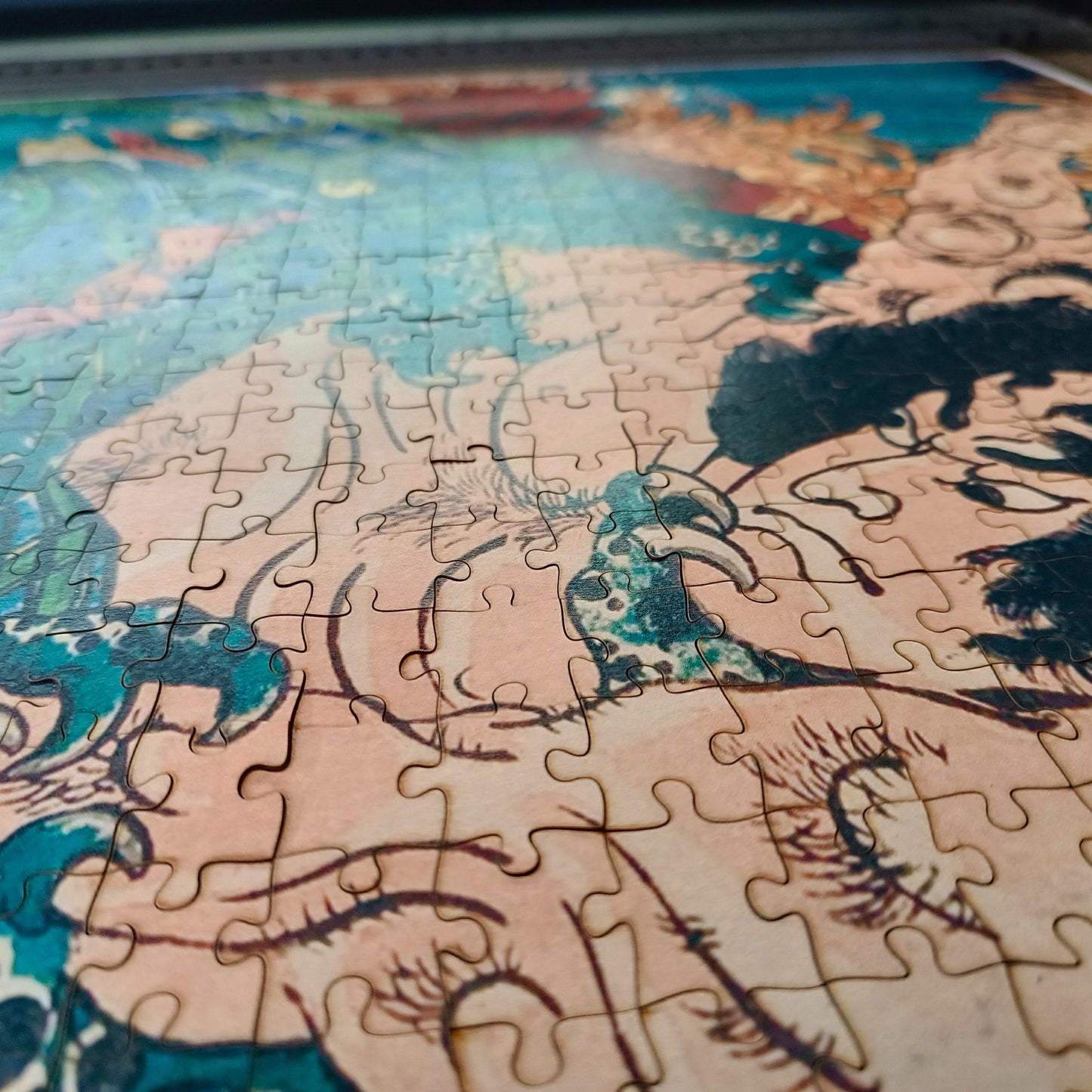
Hokusai planned one hundred ghost stories. He finished five. "The Mansion of the Plates" was one of them — a print where Okiku's ghost rises from the well that drowned her, her neck formed entirely from the column of plates she was accused of breaking. The image is a visual pun and a horror story at the same time. Hokusai understood those weren't different things.
📖 The Story Behind This Piece
Around 1831–1832, Hokusai began a series called "One Hundred Ghost Stories" — a title borrowed from a popular Edo-period ritual in which participants gathered by candlelight, took turns telling ghost stories, and extinguished a flame after each one. The series was meant to run to one hundred prints. Hokusai stopped at five. "The Mansion of the Plates" is the most striking of them: Okiku's spectral form rising from the well, her long neck spiraling into a stack of dishes, a wisp of smoke leaving her mouth. The Prussian blue he used — newly affordable in Japan at the time — gives the whole scene a cold that feels deliberate.
Hokusai changed his name at least thirty times across his career, each name marking what he believed was a new artistic self. By his seventies, when he made this print, he'd spent decades pushing ukiyo-e beyond decoration and into something stranger. The ghost series was a late-career experiment in atmosphere over beauty. Okiku's neck made of plates wasn't a concession to spookiness. It was Hokusai using the grotesque to make a point about how objects and people get tangled up in systems of blame.
The blue in this print is the detail that changes under UV printing on wood. On a screen, Prussian blue reads flat. On a wooden surface with no paper laminate between the ink and the eye, it has a depth that shifts — cooler in the shadows of the well, slightly warmer in the plates where the light catches them. During assembly, that difference becomes legible for the first time. The section around Okiku's hands, where the column of plates begins to form, is where the gradient reveals itself one piece at a time.
🎁 Who Gets One of These
A few specific types of people keep ordering this one.
✔️ The Japanese woodblock collector who owns prints but not puzzles — You already know Hokusai's "One Hundred Ghost Stories" series is incomplete. Spending real time with one of the five existing prints, piece by piece, is a different kind of looking than hanging it on a wall.
✔️ The folklore scholar or enthusiast who knows the Okiku story — The legend predates Hokusai by centuries and has at least three regional versions. Seeing how he condensed it into a single visual grammar — neck, plates, well, smoke — is worth rebuilding slowly.
✔️ The person who has outgrown cardboard puzzles — You want something that stays in the house after it's assembled. A wooden keepsake box and a Hokusai ghost story on 3mm MDF qualifies.
✔️ The museum shop regular who buys art gifts seriously — A print reproduction is flat. A puzzle of the same image gives the recipient something to do with it first, and then a reason to frame it.
✔️ The horror aesthetics enthusiast who reads the Edo-period stuff — Kaidan fiction, yokai illustration, the whole tradition. Hokusai's five ghost prints sit right at the center of that canon. Okiku specifically.
Works well as a birthday gift for anyone who studies Japanese art, folklore, or cultural history. Halloween is an obvious seasonal moment given the subject, though buyers who know this image tend to order it year-round. Strong fit for anyone celebrating a milestone who wants something deliberate rather than decorative.
🧩 Puzzle Specifications
✔️ Precision laser-cut wooden pieces
✔️ 3mm MDF core — rigid, warp-resistant, built to last
✔️ UV printing directly on wood — no paper laminate, no peeling
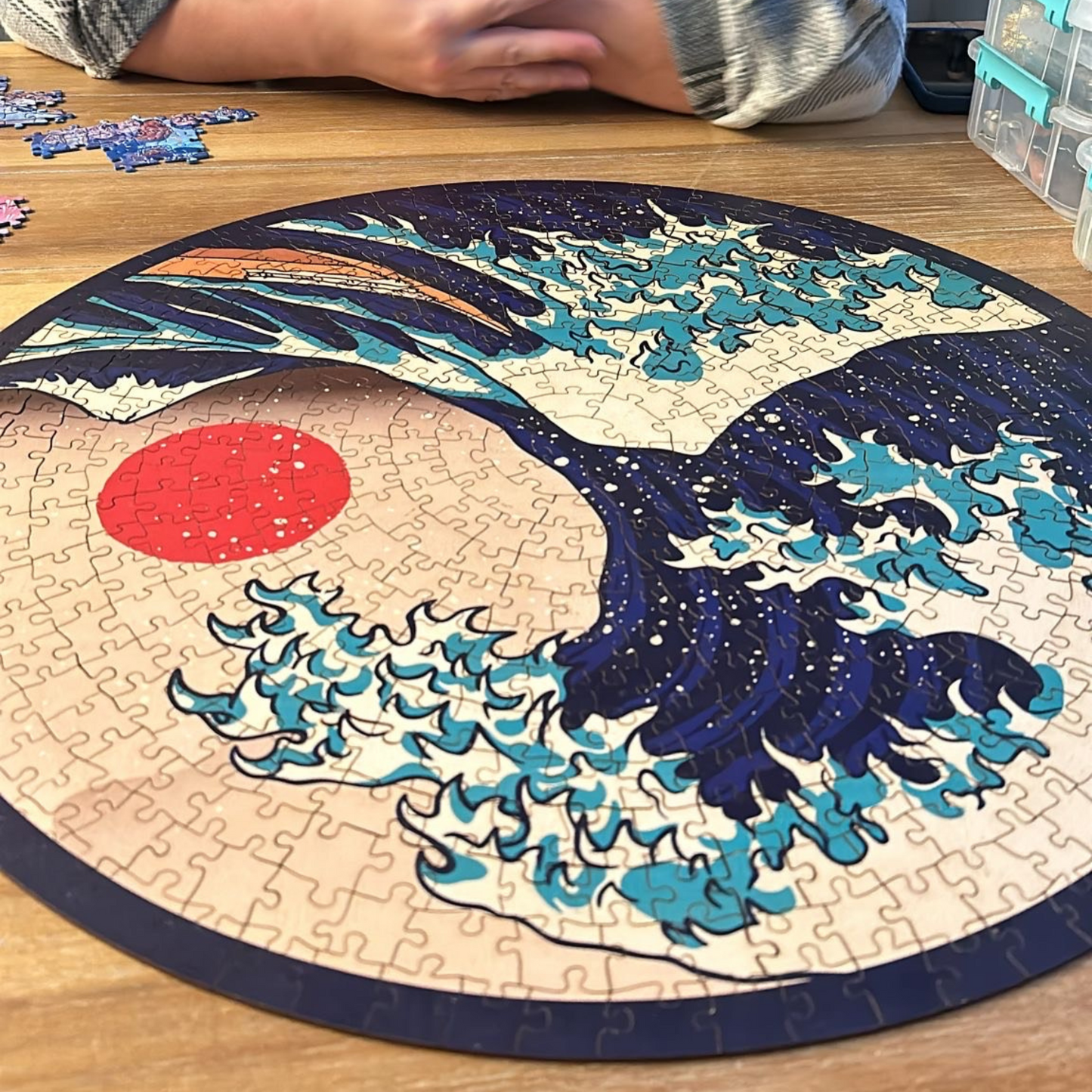
✔️ Traditional grid-cut design
✔️ Sizes: 15"x23", 18"x24", 23"x31"
✔️ Piece counts: 300–1000
✔️ Handcrafted wooden keepsake box included
✔️ Made to order — ships in 3–4 weeks
💎 Why This Puzzle Lasts
Most wooden puzzle makers charge $300–$500. The craft justifies it. WAWW gets there differently: direct manufacturing, no wholesale chain, made to order with no warehouse inventory to carry. Same materials, no markup. The price difference is structural, not a sign of corners cut.
The 3mm MDF core is why a finished puzzle still clicks cleanly years later. Cardboard compresses and warps. MDF holds its shape through humidity and handling, so pieces seat correctly whether you're assembling it the first time or the fifth. UV printing goes directly onto the wood surface with no paper laminate in between. Nothing peels. The Prussian blue Hokusai used — already a cold, precise pigment — stays exactly as saturated a decade from now as it does when the box first opens.
Traditional grid cutting means every piece has a defined orientation and a clean fit. No gimmick shapes, no ambiguous edges. When you seat a piece, you know it's right. The wooden keepsake box is part of the object, not the packaging. After the puzzle is assembled and framed, the box tends to stay. People keep things in it. Production is made to order, which means your puzzle doesn't exist in a warehouse waiting to degrade. It gets made when you order it, which is why there's a 3–4 week lead time and why the quality holds.