


The Milkmaid by Vermeer - Premium Wooden Jigsaw Puzzle
The Milkmaid by Vermeer - Premium Wooden Jigsaw Puzzle
- Regular price
- Price: $115.00
- Regular price
- List Price: $0.00
- Sale price
- Price: $115.00
- Unit price
- per
Key Features:
Key Features:
- Premium Quality: Crafted from durable 3mm (.14in) composite wood board for lasting enjoyment.
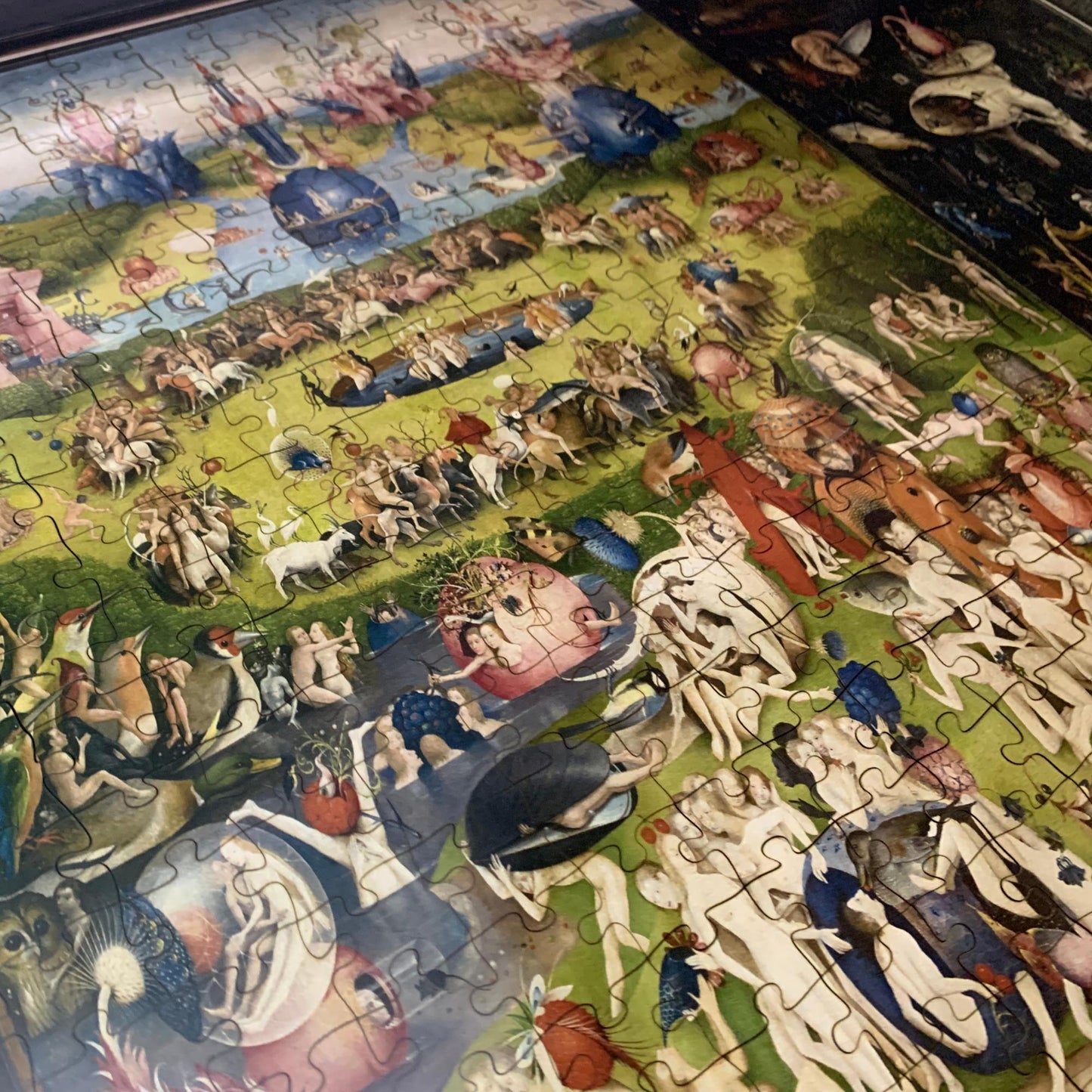
- Vibrant Imagery: High-resolution UV printing directly on the wood—no paper laminate—for stunning detail and vibrant colors.
- Eco-Conscious: Made with environmentally friendly materials.
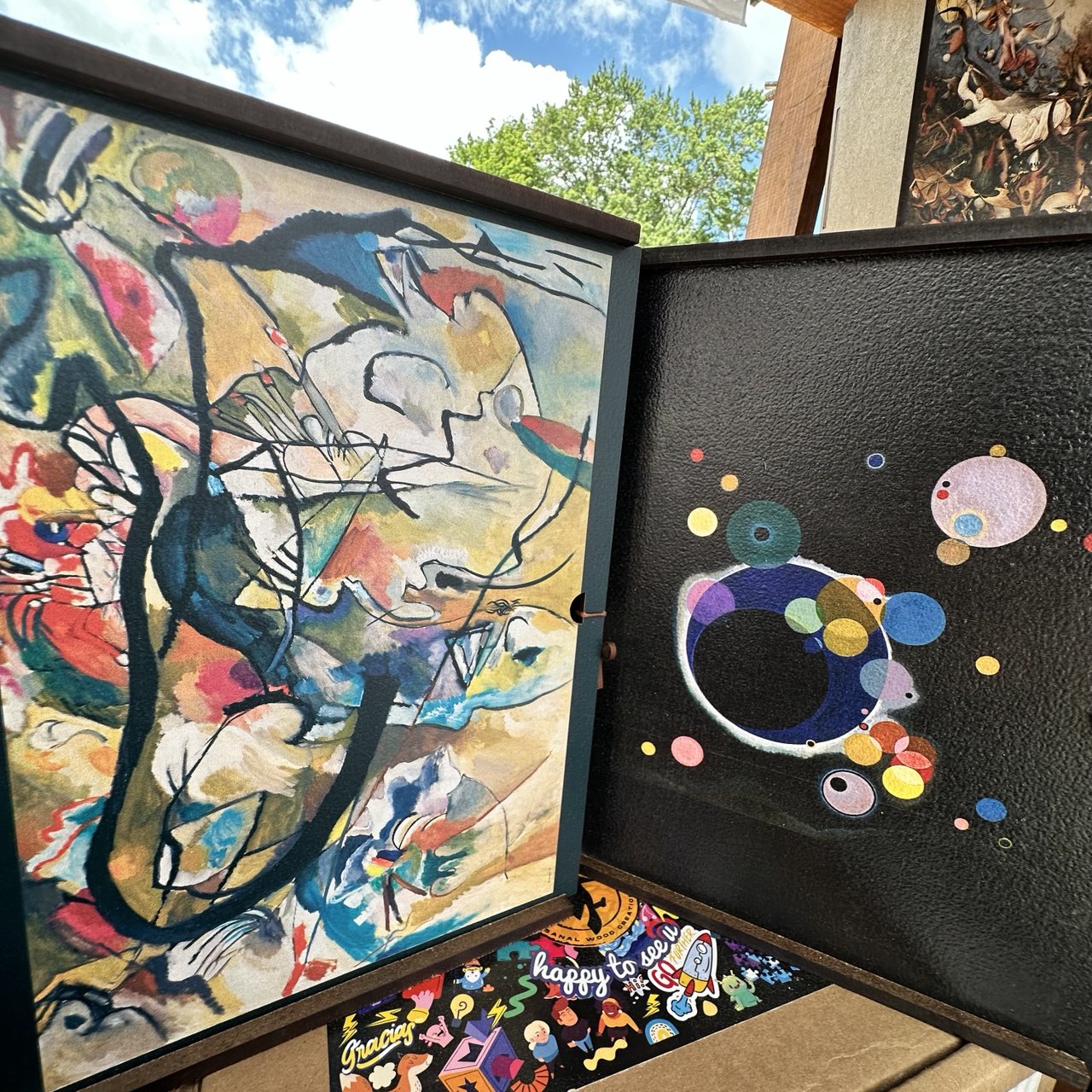
- Heirloom Keepsake: Your puzzle arrives beautifully packaged in a handcrafted wooden box, perfect for gifting or storing your masterpiece.
Craftsmanship and Care:
Craftsmanship and Care:
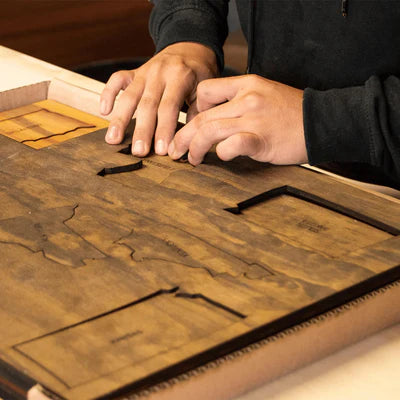
Experience the satisfying click of perfectly interlocking pieces. Our state-of-the-art laser cutting ensures precise fit and a smooth, seamless puzzle-solving experience. The perfect upgrade from cardboard without breaking the bank.
- Natural Laser Residue: A small amount of harmless black residue from the laser cutting process may be present. Simply wipe it away with a damp cloth.
- Hand-Finished Details: Each puzzle board, each wooden box are all carefully hand-stained, painted, and glued.
Satisfaction Guaranteed:
Satisfaction Guaranteed:
We are confident in the quality of our puzzles. If you are not completely satisfied, we offer a full refund or exchange.
PLEASE NOTE:
Each puzzle is crafted to make the most of your chosen size. Artwork may be subtly adjusted to meet our material and production standards while honoring the original work. Planning to frame yours? Email info@whatawoodwork.com for final measurements.
Couldn't load pickup availability
In stock
 PRODUCT DESCRIPTION
The Milkmaid: Vermeer used natural ultramarine for her apron. In 1660, that pigment cost more per ounce than gold.
He spent it on a kitchen maid. Not a duchess, not a patron's wife. A woman pouring milk into a bowl, alone in a room, doing ordinary work with total concentration. The Rijksmuseum eventually released high-resolution scans of the painting specifically to replace the yellowed, degraded reproductions that had spread everywhere. Even they thought the real colors were worth protecting.
📖 The Story Behind This Piece
Vermeer finished The Milkmaid around 1660, during a period when Dutch genre painters routinely used domestic scenes as cover for ribald humor or moralizing allegory. Milkmaids in particular were stock characters in bawdy imagery. Vermeer ignored all of that. His maid stands in a corner, light coming hard from the left through a small window, and she pours. No narrative, no wink, no lesson. The foot warmer at her feet and the Delft tile depicting Cupid behind her are there, quiet as furniture, for whoever wants to look.
Vermeer painted with a technique called pointillé on the bread in the foreground, applying small dots of light-colored paint to suggest the irregular crust of a hard roll. It reads as texture from across a room and dissolves into pure mark-making up close. He used that kind of deliberate dual-register thinking throughout his work: paintings that operate one way at distance and entirely another way at six inches. He made roughly 34 paintings in his lifetime. Every one of them was built like this.
During assembly, the upper left quadrant is where things get specific. The wall behind the maid is not white. Vermeer built it from layers of warm gray and cool shadow, and those tones shift as the background pieces come together. On a cardboard puzzle, that area flattens into a single dead zone. UV printing directly onto the 3mm wood core preserves the actual chromatic variation, so the gradation from window-lit plaster to shadow reads the way it does in the Rijksmuseum: like a room, not a backdrop.
🎁 Who Gets One of These
A handful of people will see this listing and recognize exactly what they're looking at. Here's who they are.
✔️ The museum-goer who stood in the Rijksmuseum's Gallery of Honour — You know this painting from three feet away, how small it actually is, how much the light does. Working through 1000 pieces of it is a different kind of attention.
✔️ The art history reader who has an opinion about Vermeer's camera obscura — Whether you're a believer or a skeptic, the geometry of this painting is the argument. The puzzle gives you weeks with that geometry.
✔️ The realism painter who studies from reproductions — The pointillé on the bread, the cool rim light on the ceramic jug, the way the linen reads against the tablecloth. Full size, on wood, not a screen.
✔️ The collector whose bookshelves run to Dutch Golden Age monographs — You already own the Steadman. You probably own the Chevalier novel too. A puzzle built to the same standard belongs in the same house.
✔️ The gift-giver who can't give another candle or coffee table book — A handcrafted wooden puzzle of a painting the recipient knows and loves is not a generic gift. It is a specific one.
Works well for birthdays, anniversaries, and winter holidays. The subject — domestic, warm, lit from the side — fits comfortably in nearly any home without needing explanation.
🧩 Puzzle Specifications
✔️ Precision laser-cut wooden pieces
✔️ 3mm MDF core — rigid, warp-resistant, built to last
✔️ UV printing directly on wood — no paper laminate, no peeling
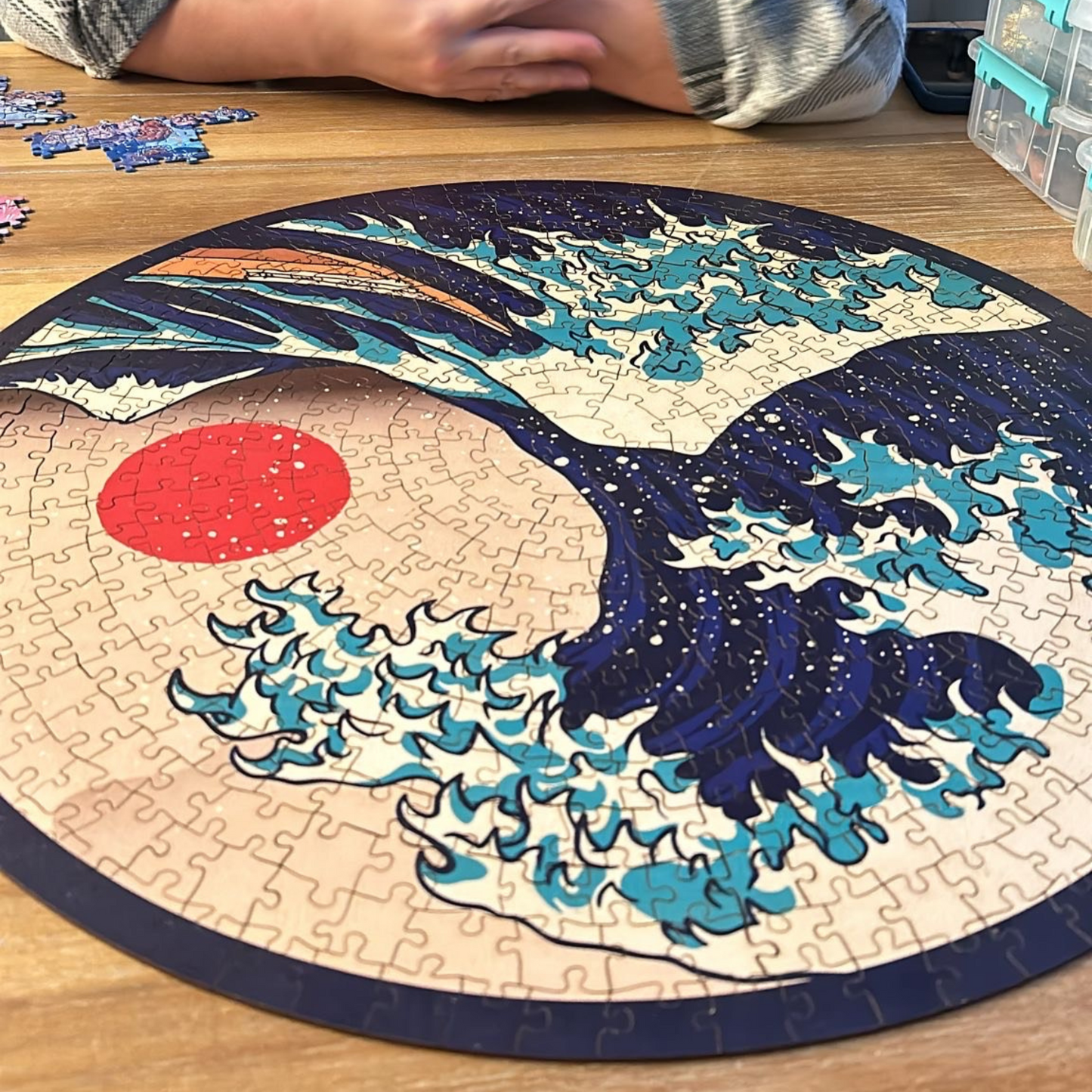
✔️ Traditional grid-cut design
✔️ Sizes: 15"x23", 18"x24", 23"x31"
✔️ Piece counts: 300–1000
✔️ Handcrafted wooden keepsake box included
✔️ Made to order — ships in 3–4 weeks
💎 Why This Puzzle Lasts
Most wooden puzzle makers charge $300 to $500. The craft justifies that price. WAWW gets to $115–$170 through direct manufacturing and no wholesale chain, not by cutting corners on materials. Same 3mm MDF core. Same UV-printed surface. No markup layered in for a middleman who never touched the thing.
The MDF core is why the pieces still click cleanly after years of storage. Cardboard absorbs humidity and warps; MDF doesn't. Lift a completed section and it holds. Put the puzzle away for a decade and the pieces fit the same way they did the first time. UV printing goes directly into the wood surface, so there's no paper laminate to bubble, crack, or yellow. The ultramarine in the maid's apron stays the color Vermeer chose, not the color a degraded reproduction settled into.
The laser cut follows a traditional grid pattern, which means every piece has a clear role and a definite fit. No proprietary shapes designed to frustrate. Solving feels like solving. The wooden keepsake box arrives as part of the object, not packaging — it's built to hold the puzzle after it's been assembled and taken apart, and it looks like something worth keeping on a shelf. Every puzzle is made to order, which means there's no warehouse version sitting under fluorescent lights for eight months before it reaches you. The wait is three to four weeks. What arrives was made for this order.
Vermeer spent the equivalent of a laborer's monthly wage on the blue pigment alone. The Milkmaid has been in the Rijksmuseum since 1908. Rebuilding it piece by piece from your own kitchen table is a reasonable way to get to know it.