


The Russian Octopus by Grossi - Premium Wooden Jigsaw Puzzle
The Russian Octopus by Grossi - Premium Wooden Jigsaw Puzzle
- Regular price
- Price: $115.00
- Regular price
- List Price: $0.00
- Sale price
- Price: $115.00
- Unit price
- per
Key Features:
Key Features:
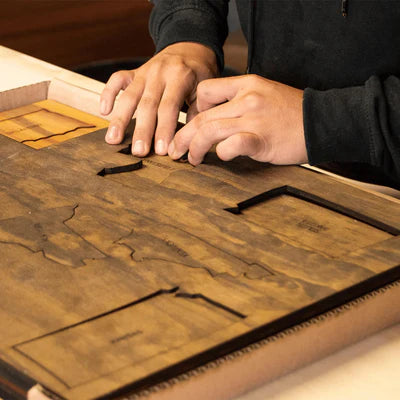
- Premium Quality: Crafted from durable 3mm (.14in) composite wood board for lasting enjoyment.
- Vibrant Imagery: High-resolution UV printing directly on the wood—no paper laminate—for stunning detail and vibrant colors.
- Eco-Conscious: Made with environmentally friendly materials.
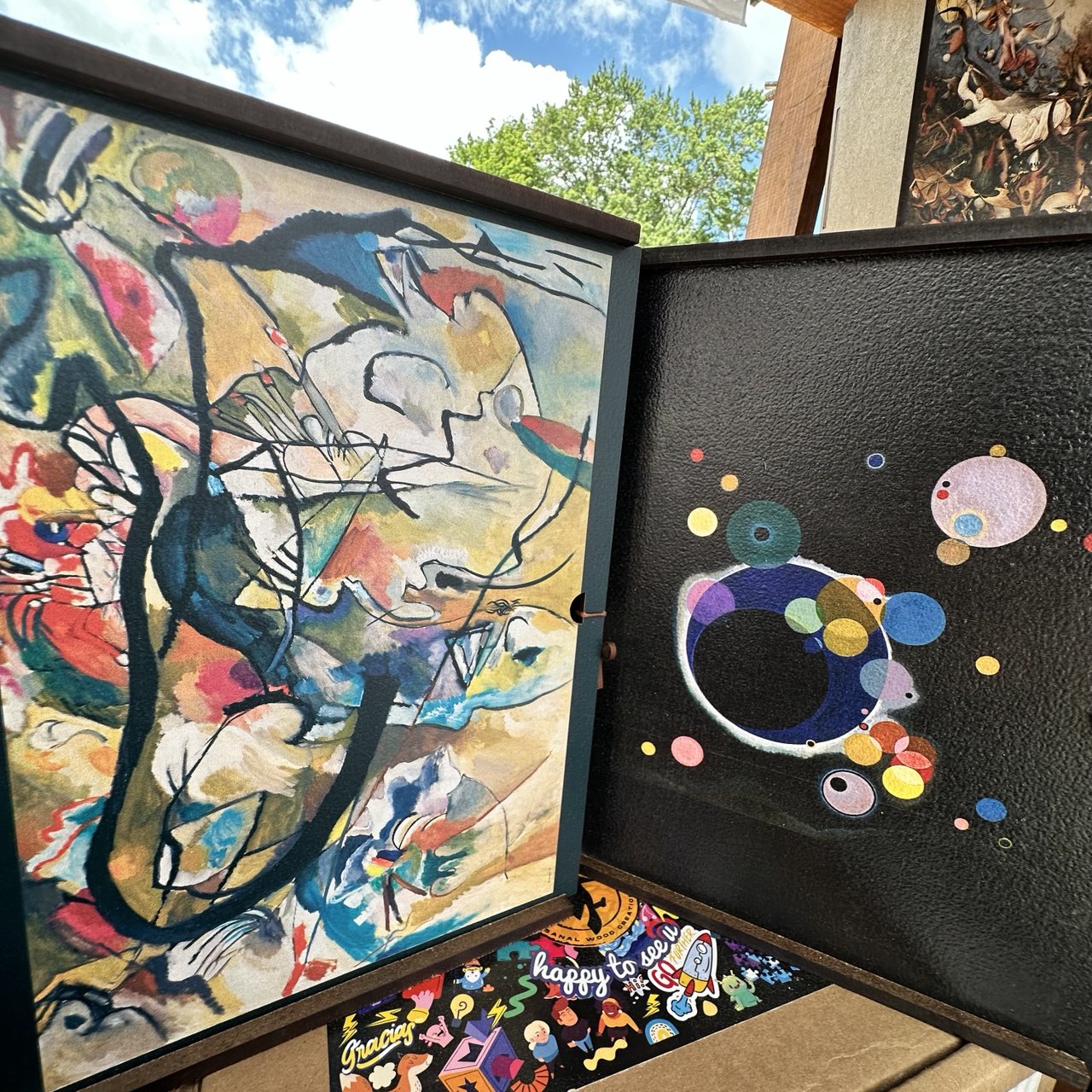
- Heirloom Keepsake: Your puzzle arrives beautifully packaged in a handcrafted wooden box, perfect for gifting or storing your masterpiece.
Craftsmanship and Care:
Craftsmanship and Care:
Experience the satisfying click of perfectly interlocking pieces. Our state-of-the-art laser cutting ensures precise fit and a smooth, seamless puzzle-solving experience. The perfect upgrade from cardboard without breaking the bank.
- Natural Laser Residue: A small amount of harmless black residue from the laser cutting process may be present. Simply wipe it away with a damp cloth.
- Hand-Finished Details: Each puzzle board, each wooden box are all carefully hand-stained, painted, and glued.
Satisfaction Guaranteed:
Satisfaction Guaranteed:
We are confident in the quality of our puzzles. If you are not completely satisfied, we offer a full refund or exchange.
PLEASE NOTE:
Each puzzle is crafted to make the most of your chosen size. Artwork may be subtly adjusted to meet our material and production standards while honoring the original work. Planning to frame yours? Email info@whatawoodwork.com for final measurements.
Couldn't load pickup availability
In stock
 PRODUCT DESCRIPTION
The Russian Octopus — Wooden Jigsaw Puzzle
In 1878, a Bologna humor journal published a map of Europe with Russia drawn as a giant octopus strangling its neighbors. It ran as a supplement. A throwaway. The Library of Congress now holds an original print in its permanent collection. Augusto Grossi knew exactly what he was doing when he drew Turkey and Poland in those tentacles — and so did every European who saw it.
📖 The Story Behind This Piece
Grossi made this chromolithograph in 1878, weeks after the Russo-Turkish War ended, as a supplement to Il Papagallo — a Bolognese satirical journal whose name translates to The Parrot. The map is Europe, but barely. Russia dominates the center as a massive cephalopod, its arms coiled around Turkey, Poland, and Persia. Greece appears not as a nation but as a crab, scuttling at the edges. Every country gets an editorial opinion. None of them are flattering.
Grossi worked in the tradition of persuasive cartography — the practice of using geographic form to make political arguments that plain text couldn't get away with. Il Papagallo gave him cover. Calling it humor meant the image could say things that editorials couldn't. The octopus metaphor for imperial expansion had been circulating in European political commentary for years, but Grossi was the one who put it on a map and made it stick.
When you're sorting pieces early, the tentacles are your problem. Eight arms, each curling at a slightly different angle, rendered in deep Prussian blue against the pale continent below. UV printing directly onto the MDF wood surface means the chromolithograph's original ink variations survive — the places where Grossi's press laid down heavier pigment read differently than the washed-out margins. On screen, it flattens. On wood, those tonal differences stay, and you'll notice them mid-sort in a way that makes the satire feel less like art history and more like someone's actual opinion.
🎁 Who Gets One of These
A few specific people come to mind.
✔️ The Cold War historian who still follows Eastern European politics — The octopus metaphor didn't retire in 1878. Assembling a map that predicted the next 150 years of Russian foreign policy has a particular edge.
✔️ The antique map collector who runs out of wall space — Original chromolithograph political maps from 1878 don't come cheap or often. A wooden puzzle reproduction of a Library of Congress print is a different kind of ownership.
✔️ The political science professor looking for a gift that isn't a book — Grossi's visual argument about imperial overreach is the kind of thing that generates a real conversation, not just a thank-you note.
✔️ The person who decorates with vintage graphics and reads the credits — Il Papagallo humor journal, Bologna, 1878, Library of Congress permanent collection. Every detail on this one earns its place on the wall.
✔️ The dad who explains geopolitics at dinner — He already knows about the Russo-Turkish War. He will absolutely explain Greece-as-crab to anyone who asks. Give him the puzzle.
Works for Father's Day with real specificity — the subject matter does the explaining. Strong birthday gift for anyone whose bookshelves lean toward diplomatic history or cartography. Fits Christmas without forcing it.
🧩 Puzzle Specifications
✔️ Precision laser-cut wooden pieces
✔️ 3mm MDF core — rigid, warp-resistant, built to last
✔️ UV printing directly on wood — no paper laminate, no peeling
✔️ Traditional grid-cut design
✔️ Sizes: 15"x23", 18"x24", 23"x31"
✔️ Piece counts: 300–1000
✔️ Handcrafted wooden keepsake box included
✔️ Made to order — ships in 3–4 weeks
💎 Why This Puzzle Lasts
Comparable wooden puzzle makers charge $300–$500. The craft justifies that price. WAWW gets to $115–$170 through direct manufacturing and no wholesale chain in between. Same materials. No markup passed down from a distributor.
The 3mm MDF core is what makes a wooden puzzle feel different from the first piece you pick up. It has weight and a small amount of flex without warping — the same piece you click in today fits just as cleanly a decade from now. Cardboard absorbs humidity and shifts. MDF doesn't. UV printing goes directly onto that surface, bonding pigment to wood rather than paper. No laminate layer means no layer to bubble, crack, or peel away from an edge after a few years of storage.
The traditional grid cut keeps assembly honest. Pieces connect cleanly with an audible click, and the fit holds — you can carry a completed section across the table without it falling apart. When the puzzle is finished and taken apart, it goes back into a handcrafted wooden box that's built to the same standard as the puzzle itself. Most people keep the box on a shelf. It's the kind of object that gets picked up by visitors before they've even seen what's inside. Every puzzle is made after you order it.
Production takes 3–4 weeks. There's no warehouse version sitting in a stack somewhere — yours is cut specifically for you. Augusto Grossi drew this map as a punchline for a humor journal, and it turned out to be a document.