


The Temptation of Saint Anthony - Premium Wooden Jigsaw Puzzle
The Temptation of Saint Anthony - Premium Wooden Jigsaw Puzzle
- Regular price
- Price: $115.00
- Regular price
- List Price: $0.00
- Sale price
- Price: $115.00
- Unit price
- per
Key Features:
Key Features:
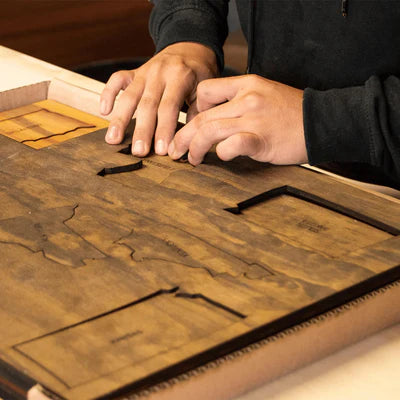
- Premium Quality: Crafted from durable 3mm (.14in) composite wood board for lasting enjoyment.
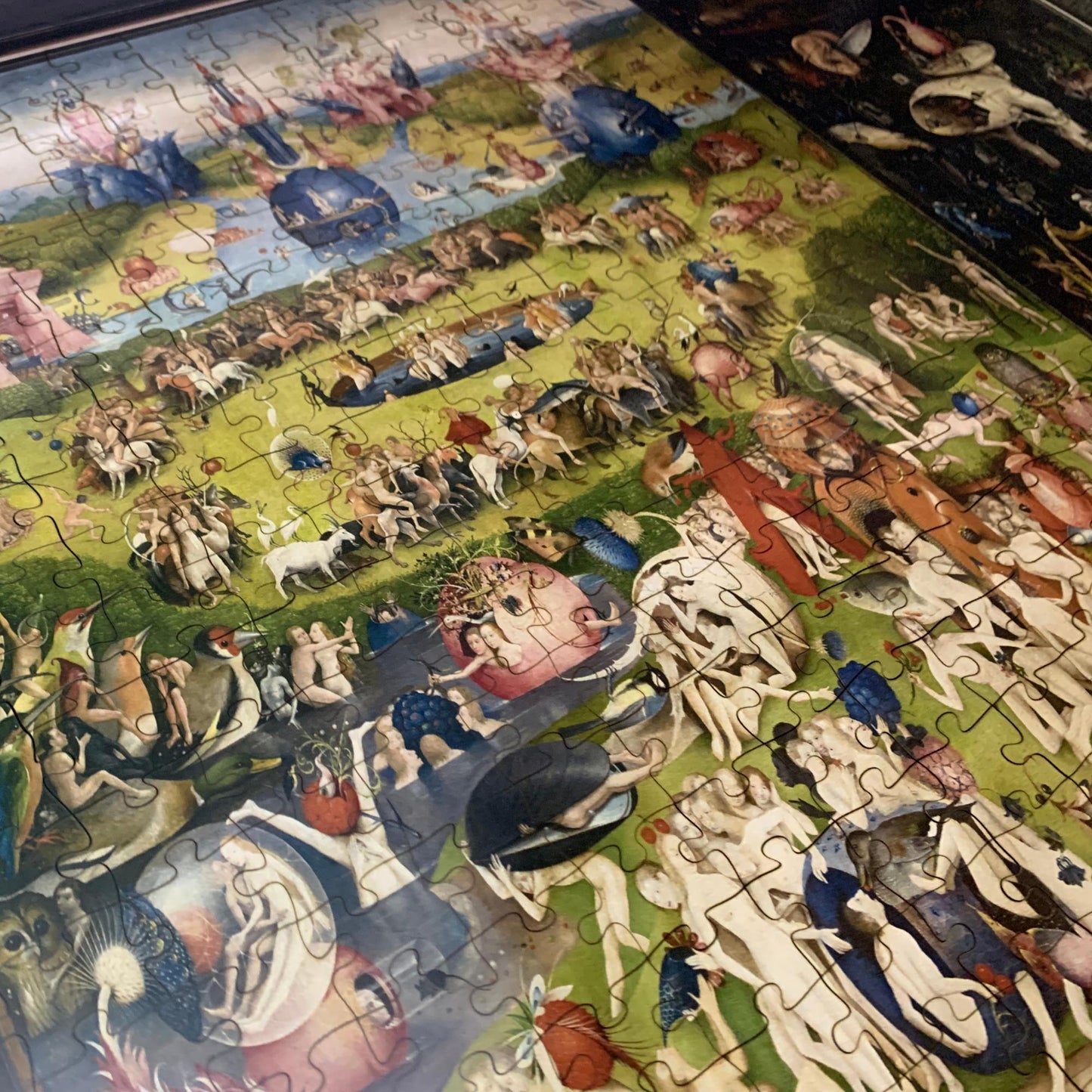
- Vibrant Imagery: High-resolution UV printing directly on the wood—no paper laminate—for stunning detail and vibrant colors.
- Eco-Conscious: Made with environmentally friendly materials.
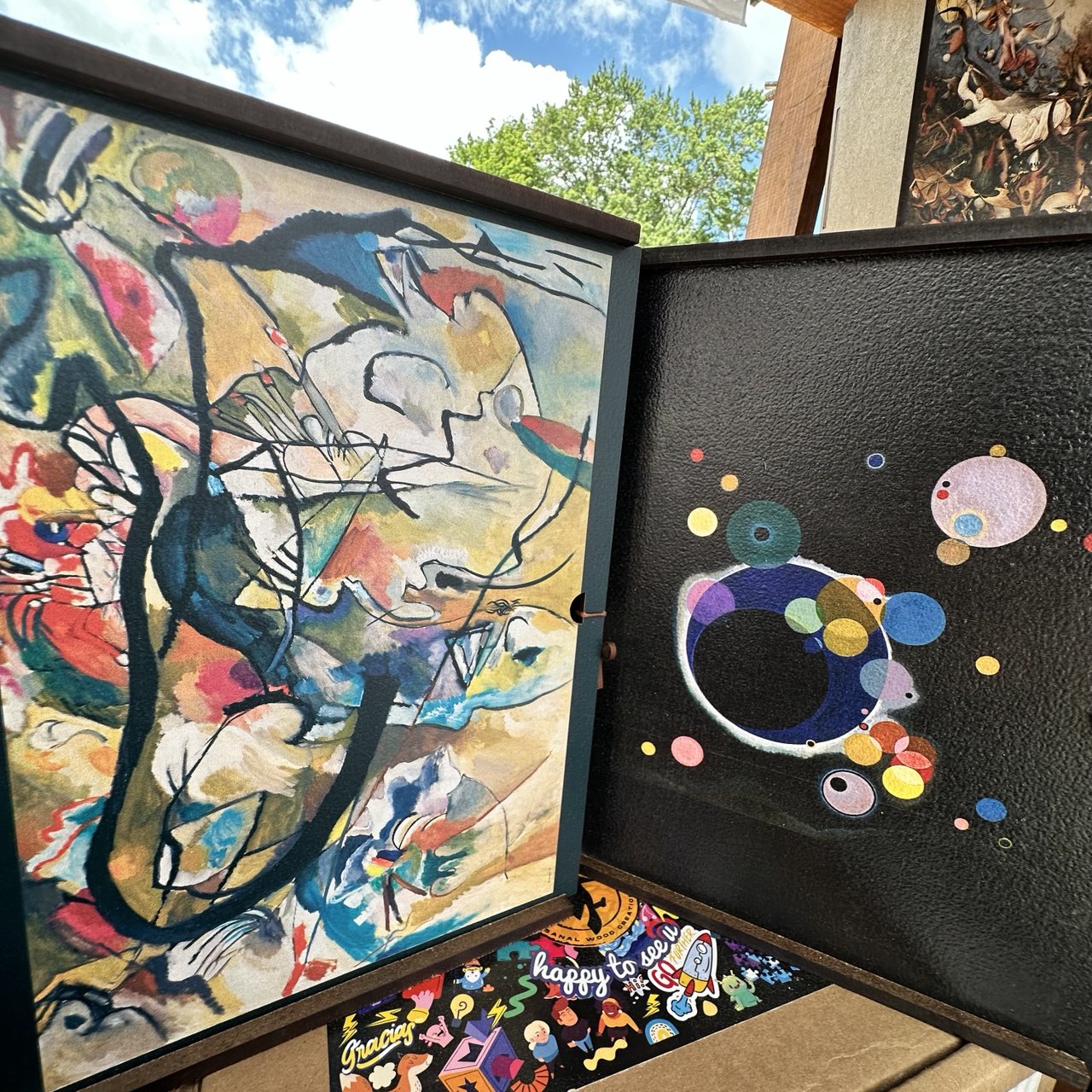
- Heirloom Keepsake: Your puzzle arrives beautifully packaged in a handcrafted wooden box, perfect for gifting or storing your masterpiece.
Craftsmanship and Care:
Craftsmanship and Care:
Experience the satisfying click of perfectly interlocking pieces. Our state-of-the-art laser cutting ensures precise fit and a smooth, seamless puzzle-solving experience. The perfect upgrade from cardboard without breaking the bank.
- Natural Laser Residue: A small amount of harmless black residue from the laser cutting process may be present. Simply wipe it away with a damp cloth.
- Hand-Finished Details: Each puzzle board, each wooden box are all carefully hand-stained, painted, and glued.
Satisfaction Guaranteed:
Satisfaction Guaranteed:
We are confident in the quality of our puzzles. If you are not completely satisfied, we offer a full refund or exchange.
PLEASE NOTE:
Each puzzle is crafted to make the most of your chosen size. Artwork may be subtly adjusted to meet our material and production standards while honoring the original work. Planning to frame yours? Email info@whatawoodwork.com for final measurements.
Couldn't load pickup availability
In stock
 PRODUCT DESCRIPTION
The Temptation of Saint Anthony — Wooden Jigsaw Puzzle
Marten de Vos painted this in Antwerp between 1591 and 1594, while the city was still rebuilding its churches after Protestant iconoclasts had stripped them bare. The altarpiece commission wasn't just religious work. It was reconstruction. Every demon he added to the swarm around Saint Anthony was also an argument about what sacred imagery could look like after a city loses its nerve for it.
📖 The Story Behind This Piece
The painting now hangs in the Royal Museum of Fine Arts Antwerp, but it was made for the Cathedral of Our Lady, as the centerpiece of an altarpiece for the Guild of Saint Anthony and Saint Hubert. Saint Anthony the Great stands surrounded by grotesque demons, chaos pressing in from every edge of the panel. His pig stands among the fiends, a traditional attribute that medieval iconography used to signify the saint's power over pestilence and disease. De Vos packed the composition with motion — figures colliding, wings overlapping, color pushing against color — and still managed to keep Anthony's stillness at the center of it.
De Vos had trained in Italy before returning to Antwerp, and what he brought back wasn't just technique. It was the conviction that Northern religious painting could carry the same physical intensity as the Italian Renaissance without abandoning its characteristic density of detail. After the Iconoclastic Fury of 1566 gutted Antwerp's church interiors, he spent decades filling them back up. The Temptation was one of his final major commissions before his death in 1603.
The demonic swarm in the lower half of the composition is where the assembly gets genuinely interesting. Digitally, those figures read as a dark mass. On the physical puzzle, the UV printing pulls out color variations that stay compressed on a screen — a greenish wing, a brick-red claw, a face half-lost in shadow with just enough detail to resolve. Working through that section, you're separating forms that de Vos differentiated with a few careful brushstrokes. The laser cut on 3mm wood gives each piece a firmness that lets you test and reset without the image shifting or the piece buckling.
🎁 Who Gets One of These
A few specific people keep finding their way to this one.
✔️ The art historian who teaches Flemish Mannerism — You've spent time explaining why de Vos matters in the decade after the Iconoclastic Fury. Now there's a reason to have his work on your table for a few weeks.
✔️ The museum member whose collection skews Northern Renaissance — You already know the KMSKA. You've probably stood in front of this altarpiece. Rebuilding it piece by piece is a different relationship with the same image.
✔️ The gift-giver who needs something for a serious reader of religious art history — Someone who owns books on Counter-Reformation iconography and has nowhere to put another one. Give them the painting instead.
✔️ The puzzler who has finished every landscape and wants a real visual problem — The demonic swarm in this composition is not forgiving. That's a recommendation, not a warning.
✔️ The collector who keeps finished puzzles — The wooden keepsake box and the image itself both hold up as objects worth keeping. De Vos's work has been studied for four centuries. It doesn't wear out.
Works well as a gift for birthdays and Christmas, particularly for recipients with a serious interest in art history, religious iconography, or Flemish painting. The subject matter carries real weight, which makes it a better fit for people who know the territory.
🧩 Puzzle Specifications
✔️ Precision laser-cut wooden pieces
✔️ 3mm MDF core — rigid, warp-resistant, built to last
✔️ UV printing directly on wood — no paper laminate, no peeling
✔️ Traditional grid-cut design
✔️ Sizes: 15"x23", 18"x24", 23"x31"
✔️ Piece counts: 300–1000
✔️ Handcrafted wooden keepsake box included
✔️ Made to order — ships in 3–4 weeks
💎 Why This Puzzle Lasts
Most wooden puzzle makers charge $300–$500. The craft justifies it. WAWW gets to the same place differently: direct manufacturing, no wholesale chain, made to order with no warehouse sitting between the maker and the buyer. Same materials. No markup absorbed into retail margin.
The 3mm MDF core is what separates this from cardboard puzzles after a few years. Cardboard absorbs humidity, softens, and eventually stops fitting cleanly. MDF doesn't. The pieces click the same way on year one as on year fifteen, and the fit is tight enough that you can lift a completed section without it falling apart. UV printing goes directly onto that wood surface, with no paper laminate between the ink and the substrate. No peeling at the edges. No fading from light exposure. The demonic reds and greens in de Vos's composition stay exactly where he put them.
The traditional grid cut means the pieces have real interlocking structure, not decorative shapes chosen for novelty. When a piece fits, it fits with resistance, and you know it. The handcrafted wooden box is not a throwaway. After the puzzle is finished and framed, the box earns a shelf. People ask about it. Each puzzle is made to order, which means nothing was sitting in a warehouse before you ordered it. The 3–4 week window is production time, not shipping delay.
🖼️ After You Finish It
Most people frame it. The wooden box ends up nearby, usually on a shelf. De Vos painted it for a guild chapel in a city that had just been stripped of its religious art — the chaos in the composition has context that comes out in conversation, once someone asks.