


Wooden Unicorn Puzzle - Vintage Victorian Art
Wooden Unicorn Puzzle - Vintage Victorian Art
- Regular price
- Price: $115.00
- Regular price
- List Price: $0.00
- Sale price
- Price: $115.00
- Unit price
- per
Key Features:
Key Features:
- Premium Quality: Crafted from durable 3mm (.14in) composite wood board for lasting enjoyment.
- Vibrant Imagery: High-resolution UV printing directly on the wood—no paper laminate—for stunning detail and vibrant colors.
- Eco-Conscious: Made with environmentally friendly materials.
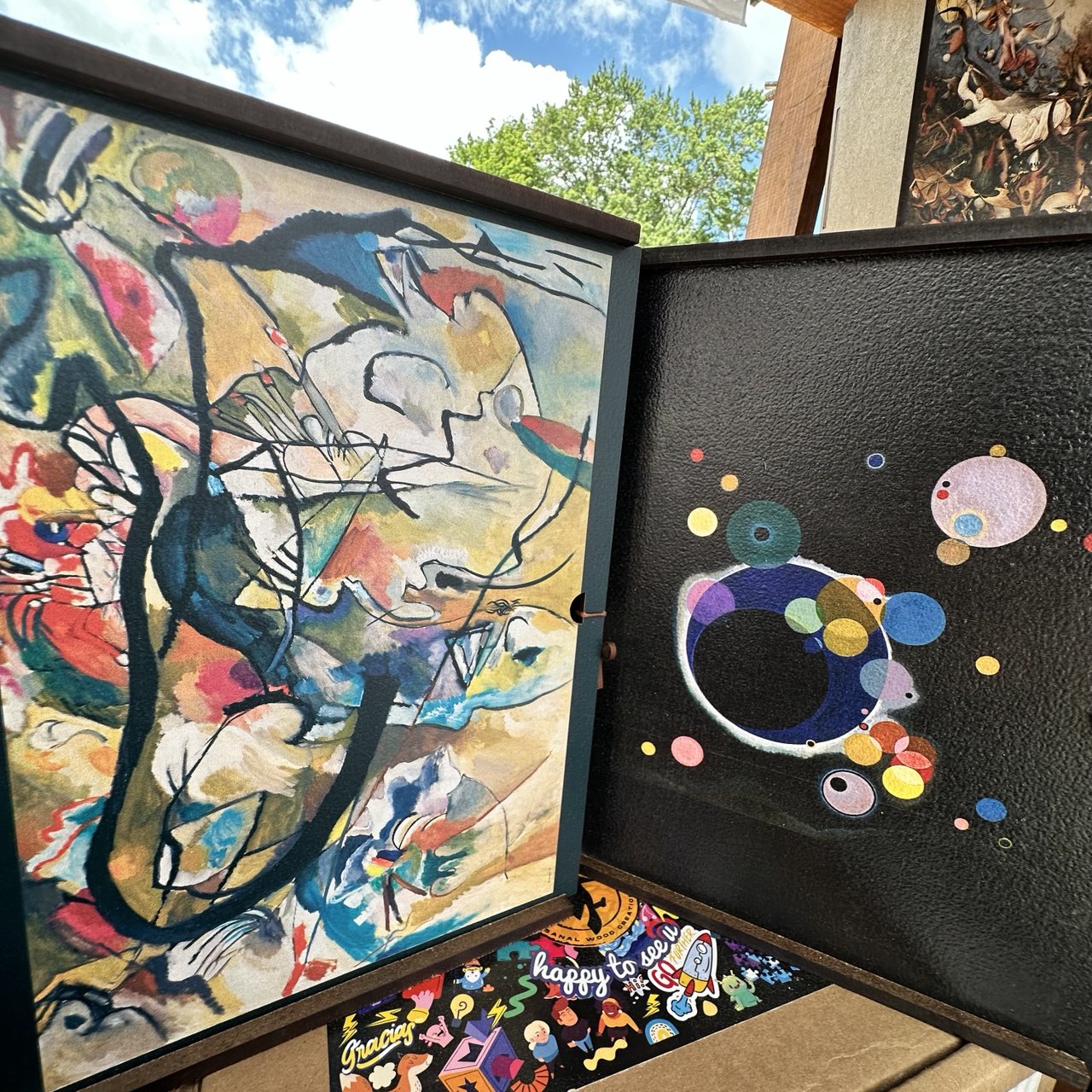
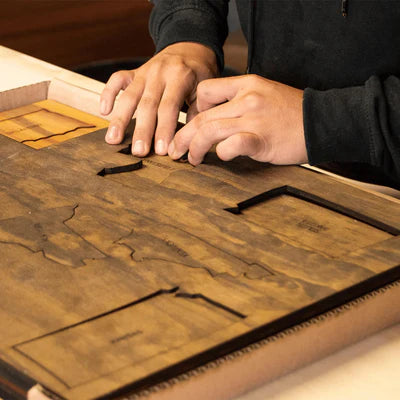
- Heirloom Keepsake: Your puzzle arrives beautifully packaged in a handcrafted wooden box, perfect for gifting or storing your masterpiece.
Craftsmanship and Care:
Craftsmanship and Care:
Experience the satisfying click of perfectly interlocking pieces. Our state-of-the-art laser cutting ensures precise fit and a smooth, seamless puzzle-solving experience. The perfect upgrade from cardboard without breaking the bank.
- Natural Laser Residue: A small amount of harmless black residue from the laser cutting process may be present. Simply wipe it away with a damp cloth.
- Hand-Finished Details: Each puzzle board, each wooden box are all carefully hand-stained, painted, and glued.
Satisfaction Guaranteed:
Satisfaction Guaranteed:
We are confident in the quality of our puzzles. If you are not completely satisfied, we offer a full refund or exchange.
PLEASE NOTE:
Each puzzle is crafted to make the most of your chosen size. Artwork may be subtly adjusted to meet our material and production standards while honoring the original work. Planning to frame yours? Email info@whatawoodwork.com for final measurements.
Couldn't load pickup availability
In stock
 PRODUCT DESCRIPTION
The Unicorn in Captivity — Wooden Jigsaw Puzzle
The red stains on the unicorn's coat aren't blood. They're pomegranate juice. The weavers who made this tapestry between 1495 and 1505 knew exactly what they were doing — the pomegranate was a symbol of fertility and resurrection, not violence. Somewhere in the green vegetation, the letters A and E are woven in. No one has ever identified who they belonged to.
📖 The Story Behind This Piece
The seventh and final panel of "The Hunt of the Unicorn" series, woven in the Southern Netherlands sometime between 1495 and 1505, shows the unicorn not dead but alive, enclosed within a low circular fence and tethered to a pomegranate tree. The scene reads as a happy ending, not a defeat. Medieval viewers would have understood it as allegory for either a joyful marriage or the Resurrection of Christ, two readings that coexisted without contradiction. John D. Rockefeller Jr. donated the series to the Metropolitan Museum of Art in 1937. The tapestries now hang at The Cloisters in New York City.
No one knows who made this. That anonymity was unremarkable at the time. Tapestry workshops in the Southern Netherlands operated as collaborative enterprises, and authorship as we understand it simply didn't apply. What survives instead are the choices: which symbols to include, where to place the monogram letters, how to render a mythical creature with enough specificity that it reads as plausible. The anonymous weavers built in riddles they expected their patrons to solve. Five centuries later, nobody has.
The background of this tapestry is dense with flora, hundreds of distinct plants rendered with botanical precision against a dark ground. When you're working through that section, you'll notice that what looked like undifferentiated green in a digital thumbnail resolves, on a UV-printed wood surface, into separate tones with real edge contrast. The ink sits in the wood rather than floating on a paper layer above it, so the mid-range values hold their depth instead of washing out. Sorting the background pieces becomes less about color matching and more about identifying individual leaf shapes.
🎁 Who Gets One of These
A few specific kinds of people end up with this one.
✔️ The medievalist who has been to The Cloisters — You've stood in that room. You've looked at the actual tapestries through climate-controlled glass. Working from a reproduction at your own pace is a different kind of looking.
✔️ The art history reader with a shelf of Umberto Eco — The symbolic layers here — pomegranate, tethered unicorn, anonymous monogram — are exactly the kind of thing you'd underline. The image rewards that attention over several sessions.
✔️ The museum member who gifts thoughtfully — Not a print, not a tote bag. Something that takes weeks to make and will outlast the occasion that prompted it.
✔️ The puzzler who has finished cardboard and wants the pieces to still click in ten years — Laser-cut MDF holds its tolerance. The fit on the last piece feels identical to the fit on the first.
✔️ The decorator who owns one or two objects that always need explaining — Framed and hung, this image draws the kind of question that turns into a twenty-minute conversation about medieval allegory.
Strong for: birthdays with a milestone attached, retirement gifts for academics or educators, anniversaries where the marriage allegory lands intentionally. A coherent holiday gift for anyone who owns their home and fills it deliberately.
🧩 Puzzle Specifications
✔️ Precision laser-cut wooden pieces
✔️ 3mm MDF core — rigid, warp-resistant, built to last
✔️ UV printing directly on wood — no paper laminate, no peeling
✔️ Traditional grid-cut design
✔️ Handcrafted wooden keepsake box included
✔️ Made to order — ships in 3–4 weeks
💎 Why This Puzzle Lasts
Most wooden puzzle makers charge $300 to $500. The craft justifies it. We arrive at a lower number through direct manufacturing and no wholesale chain. Every puzzle is made to order, so there's no warehouse moving costs down the line. Same materials. No markup passed from a distributor to a retailer to you.
The core is 3mm MDF. Pick up a finished piece and you notice it before you see it — the weight is wrong for cardboard in the best way, denser and more solid. Cardboard puzzles warp with humidity and lose their fit within a few years. The MDF holds its shape, and the laser-cut tolerances stay consistent, so pieces lock the same way on the hundredth assembly as on the first.
UV printing goes directly into the wood surface rather than onto a paper laminate bonded on top. No laminate means no peeling at the edges, no fading along the seams, no layer separation after years of handling. For an image as chromatically complex as this tapestry, that matters: the dark-ground background holds its depth, and the distinction between the unicorn's white coat and the surrounding flora stays legible long after a paper reproduction would have degraded. Pieces connect through a traditional grid cut, which sounds plain until you're working through a dense section of medieval botanicals and realize that clean, unambiguous fit is the only thing keeping the system honest. When you're done, the pieces go back into a handcrafted wooden box that was built alongside the puzzle, not shipped separately in a plastic bag. The box ends up on a shelf. People keep it. And because each puzzle is made to order after you buy, there's no pre-built inventory waiting in a warehouse. Your puzzle didn't exist before you ordered it.
The Unicorn in Captivity has hung at The Cloisters for nearly ninety years, and art historians still disagree about what the A and E monogram refers to.