


Witches' Sabbath by Goya - Premium Wooden Jigsaw Puzzle
Witches' Sabbath by Goya - Premium Wooden Jigsaw Puzzle
- Regular price
- Price: $115.00
- Regular price
- List Price: $0.00
- Sale price
- Price: $115.00
- Unit price
- per
Key Features:
Key Features:
- Premium Quality: Crafted from durable 3mm (.14in) composite wood board for lasting enjoyment.
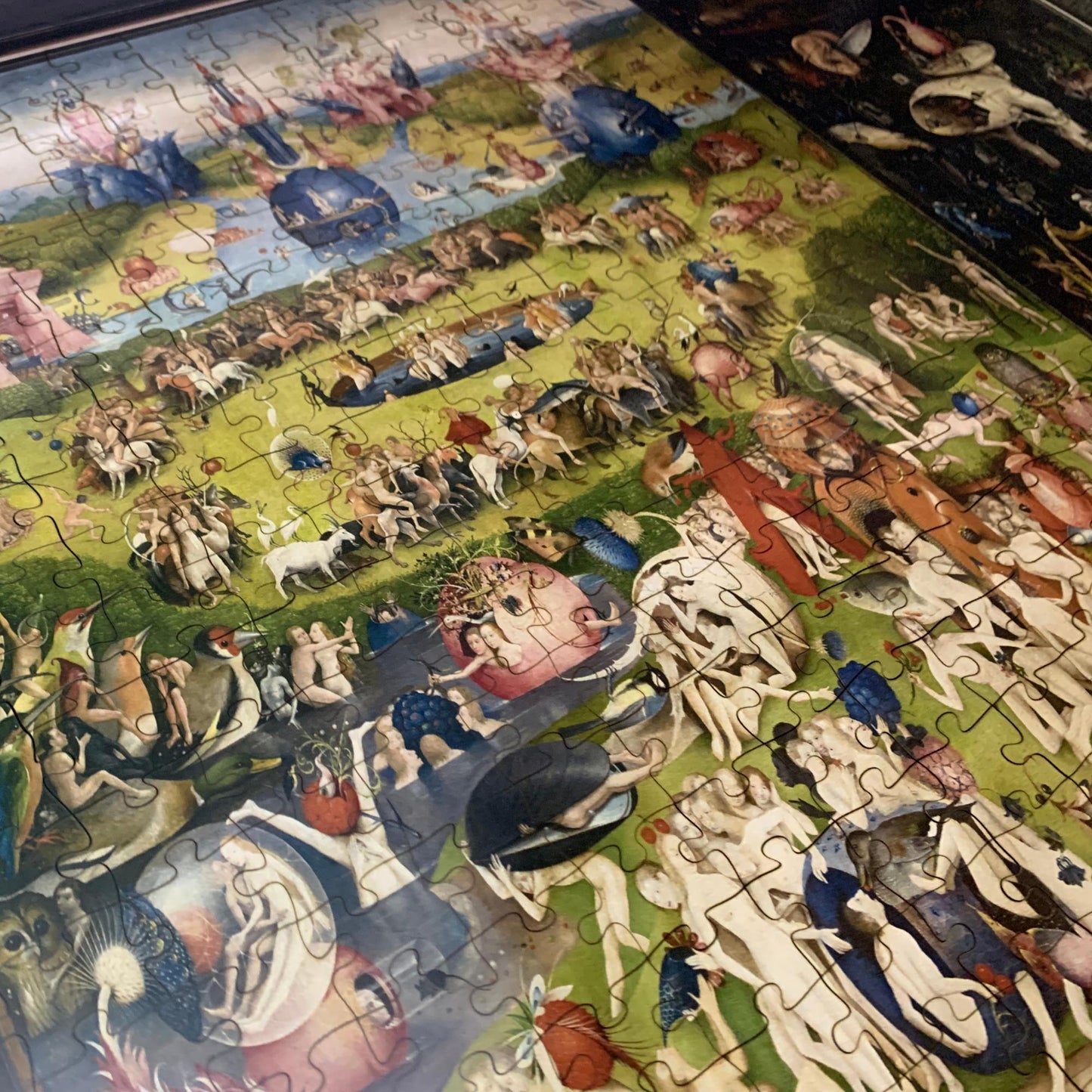
- Vibrant Imagery: High-resolution UV printing directly on the wood—no paper laminate—for stunning detail and vibrant colors.
- Eco-Conscious: Made with environmentally friendly materials.
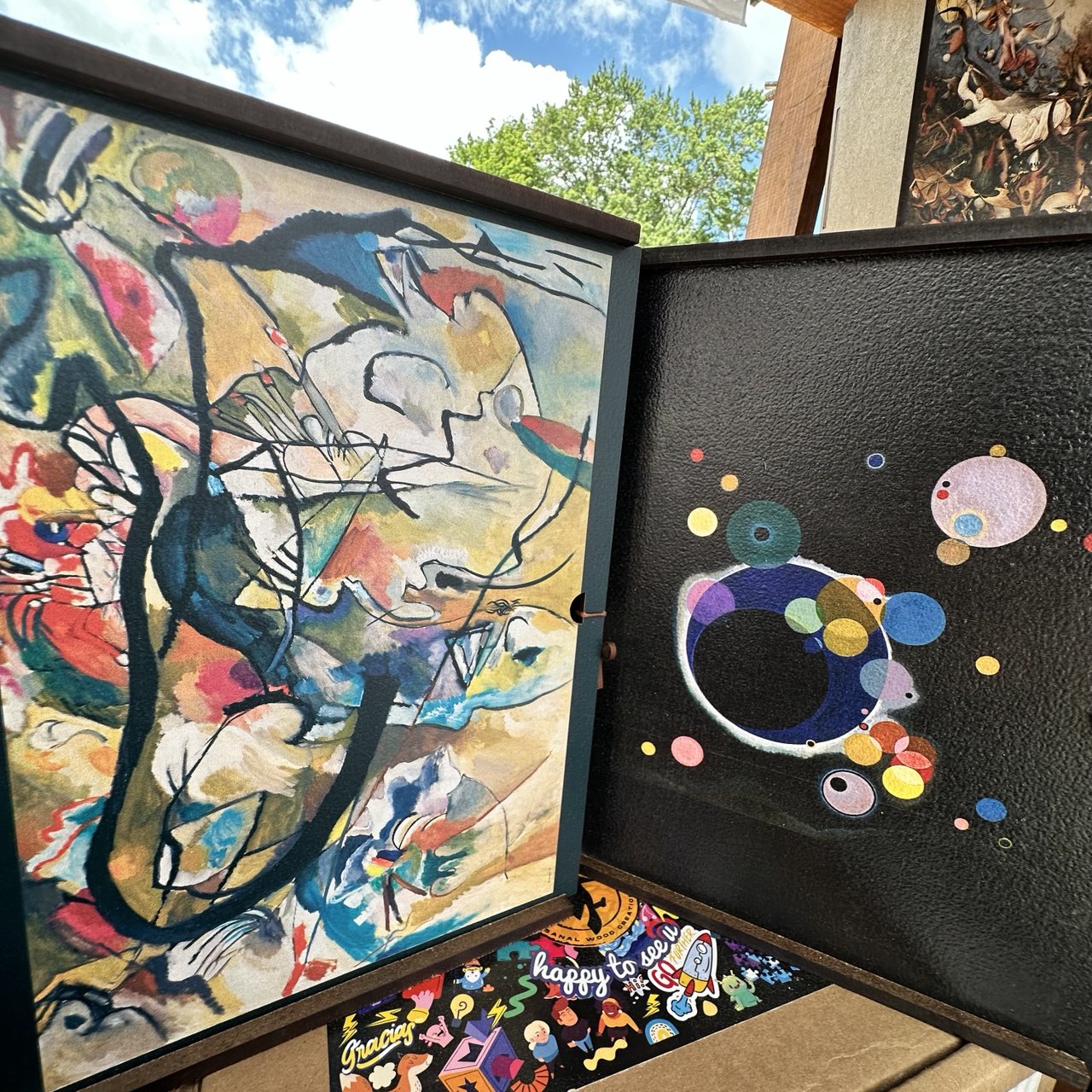
- Heirloom Keepsake: Your puzzle arrives beautifully packaged in a handcrafted wooden box, perfect for gifting or storing your masterpiece.
Craftsmanship and Care:
Craftsmanship and Care:
Experience the satisfying click of perfectly interlocking pieces. Our state-of-the-art laser cutting ensures precise fit and a smooth, seamless puzzle-solving experience. The perfect upgrade from cardboard without breaking the bank.
- Natural Laser Residue: A small amount of harmless black residue from the laser cutting process may be present. Simply wipe it away with a damp cloth.
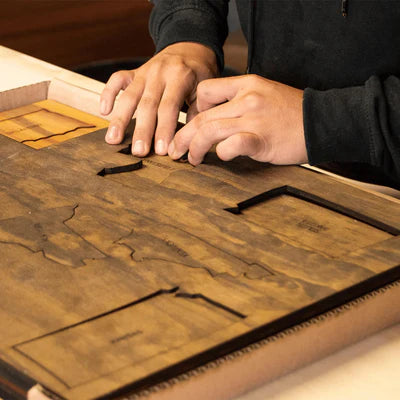
- Hand-Finished Details: Each puzzle board, each wooden box are all carefully hand-stained, painted, and glued.
Satisfaction Guaranteed:
Satisfaction Guaranteed:
We are confident in the quality of our puzzles. If you are not completely satisfied, we offer a full refund or exchange.
PLEASE NOTE:
Each puzzle is crafted to make the most of your chosen size. Artwork may be subtly adjusted to meet our material and production standards while honoring the original work. Planning to frame yours? Email info@whatawoodwork.com for final measurements.
Couldn't load pickup availability
In stock
 PRODUCT DESCRIPTION
Witches' Sabbath — Wooden Jigsaw Puzzle: Goya completed this oil on canvas between 1797 and 1798 as part of a six-painting series on witchcraft and superstition, commissioned by the Osuna family for their estate outside Madrid.
The Duke and Duchess of Osuna hung this painting in their country estate as a conversation piece. Goya painted it in 1797 as a commission, and he used it to mock the Spanish Inquisition to the faces of the aristocrats who funded it. The goat is the Devil. The infants being offered to him are real. The witches surrounding him are not the point.
📖 The Story Behind This Piece
At its center, a massive garlanded he-goat presides over a coven of witches presenting infants as offerings. The scene looks like horror. Goya meant it as satire, a pointed critique of the fear-driven logic that let the Spanish Inquisition operate with public support. It now lives in the Museo Lázaro Galdiano in Madrid, where it has for over a century.
Goya was 51 when he painted this. He had already survived a near-fatal illness that left him permanently deaf, and he had watched the Inquisition imprison people on the testimony of neighbors. He was also the court painter. He kept his position, his salary, and his satirical venom running simultaneously for years. Two decades later, in his 70s and living in voluntary isolation, he returned to the same subject and painted a much darker version directly onto the walls of his house.
The challenge in assembling Goya's palette here is that his dark tones are not flat. The background shifts between deep ochre, ash, and near-black in ways that look uniform on a screen. UV printing directly onto the wood pulls out the grain variation beneath the ink, so the shadow areas have a texture that a paper-laminate print loses entirely. The moon-lit figures in the foreground sort themselves quickly. The mass of dark, indistinct forms surrounding the goat is where the real work begins.
🎁 Who Gets One of These
A few specific people come to mind.
✔️ The art historian who teaches 18th-century European painting — Goya's dual role as court painter and Inquisition critic is a semester's worth of tension. Having the 1797 version on the wall next to your desk is different from a slide.
✔️ The collector who already owns Goya prints — You know the Black Paintings series. The 1797 commission that preceded it by 25 years shows a different register of the same argument, with more restraint and more irony.
✔️ The Gothic aesthetics person who's tired of mass-produced wall art — Goya did this before Gothic was a category. The image is sourced from a Madrid museum, not a stock library.
✔️ The puzzle enthusiast who solves 1000-piece sets and finds most of them visually boring — Goya's dark register makes the sort phase genuinely difficult. The tonal range in the shadow areas does not give itself away.
✔️ The gift-giver who needs something for someone who reads about Spanish history — The Osuna family, El Capricho, the Inquisition, the court painter who smuggled critique into a dining room decoration: there is enough here to sustain a long conversation.
Halloween is an obvious occasion, and this one actually earns it. Also works as a birthday gift for anyone whose bookshelves run toward European history, occult history, or art criticism. Not a stretch for any of those.
🧩 Puzzle Specifications
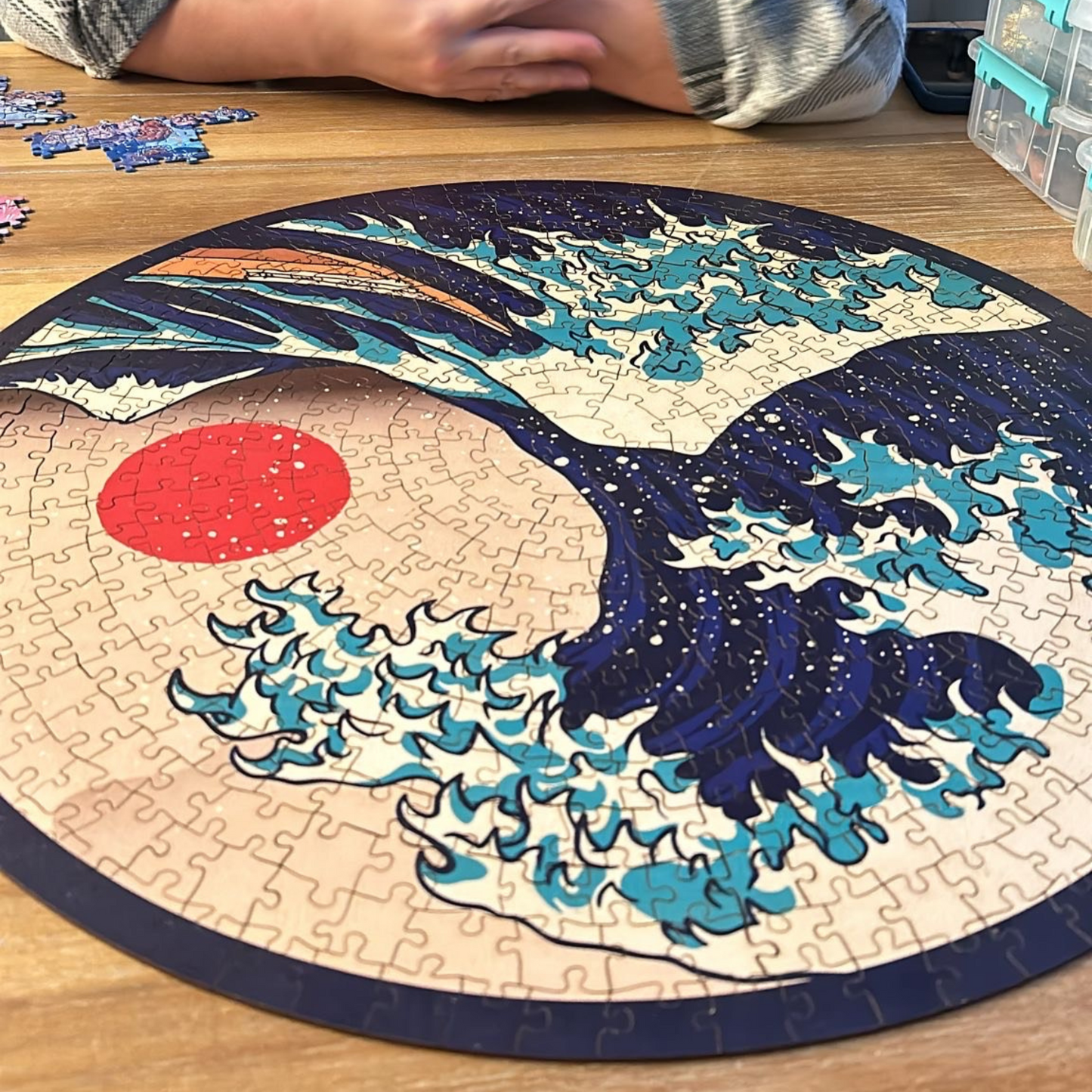
✔️ Precision laser-cut wooden pieces
✔️ 3mm MDF core — rigid, warp-resistant, built to last
✔️ UV printing directly on wood — no paper laminate, no peeling
✔️ Traditional grid-cut design
✔️ Sizes: 15"x23", 18"x24", 23"x31"
✔️ Piece counts: 300–1000
✔️ Handcrafted wooden keepsake box included
✔️ Made to order — ships in 3–4 weeks
💎 Why This Puzzle Lasts
Wooden puzzle makers who charge $300 to $500 are not overcharging. The craft justifies it. WAWW gets to the same place differently: direct manufacturing, no wholesale chain, made to order and nothing sitting in a warehouse. The materials are the same. The markup is not.
The 3mm MDF core is what keeps the pieces clicking cleanly years after the first solve. Cardboard compresses at the joints and softens with humidity; MDF holds its shape. You will not find pieces that stopped locking together because someone solved it in a warm room. The UV printing goes directly onto the wood surface with no paper layer between ink and substrate. Nothing peels at the edges. Nothing fades near a window. The image in ten years looks the same as day one.
The traditional grid cut means each piece has a defined shape with a clean positive-negative fit. No novelty whittled silhouettes that make you wonder if a piece is turned wrong. When it locks, it locked. The wooden keepsake box that arrives with the puzzle is built from the same quality of material as the puzzle itself; most people keep it. Made to order means your puzzle does not exist until you buy it. Production starts when you place the order, which is why it ships in 3 to 4 weeks and why there is no surplus to discount.